Businesses invest in managed IT services to improve reliability, strengthen security, and reduce the burden on internal teams. Yet many still feel disconnected from what their managed IT provider is actually doing. When communication is inconsistent or reporting lacks meaningful insights, it becomes difficult to measure performance or make informed technology decisions.
The best managed IT partnerships are built on visibility, not guesswork. Strong communication and structured reporting keep businesses informed, reduce uncertainty, and create accountability on both sides. Rather than simply fixing technical issues, a managed IT team should provide clear updates, useful reports, and proactive recommendations that help businesses stay ahead of potential risks.
Why Communication Matters in Managed IT
Technology supports almost every part of a modern business, from daily operations and customer service to cybersecurity and business continuity. When something changes within your IT environment, decision-makers need timely and accurate information to understand what is happening and what action, if any, needs to be taken.
Good communication is about much more than answering support tickets. It helps businesses understand system performance, track ongoing work, identify emerging risks, and plan for future improvements. A managed IT team that communicates well becomes a trusted extension of the business rather than simply an external service provider.
Strong communication also benefits both technical and non-technical stakeholders. Clear updates help employees feel supported, while business leaders gain better visibility into IT performance and strategic priorities.
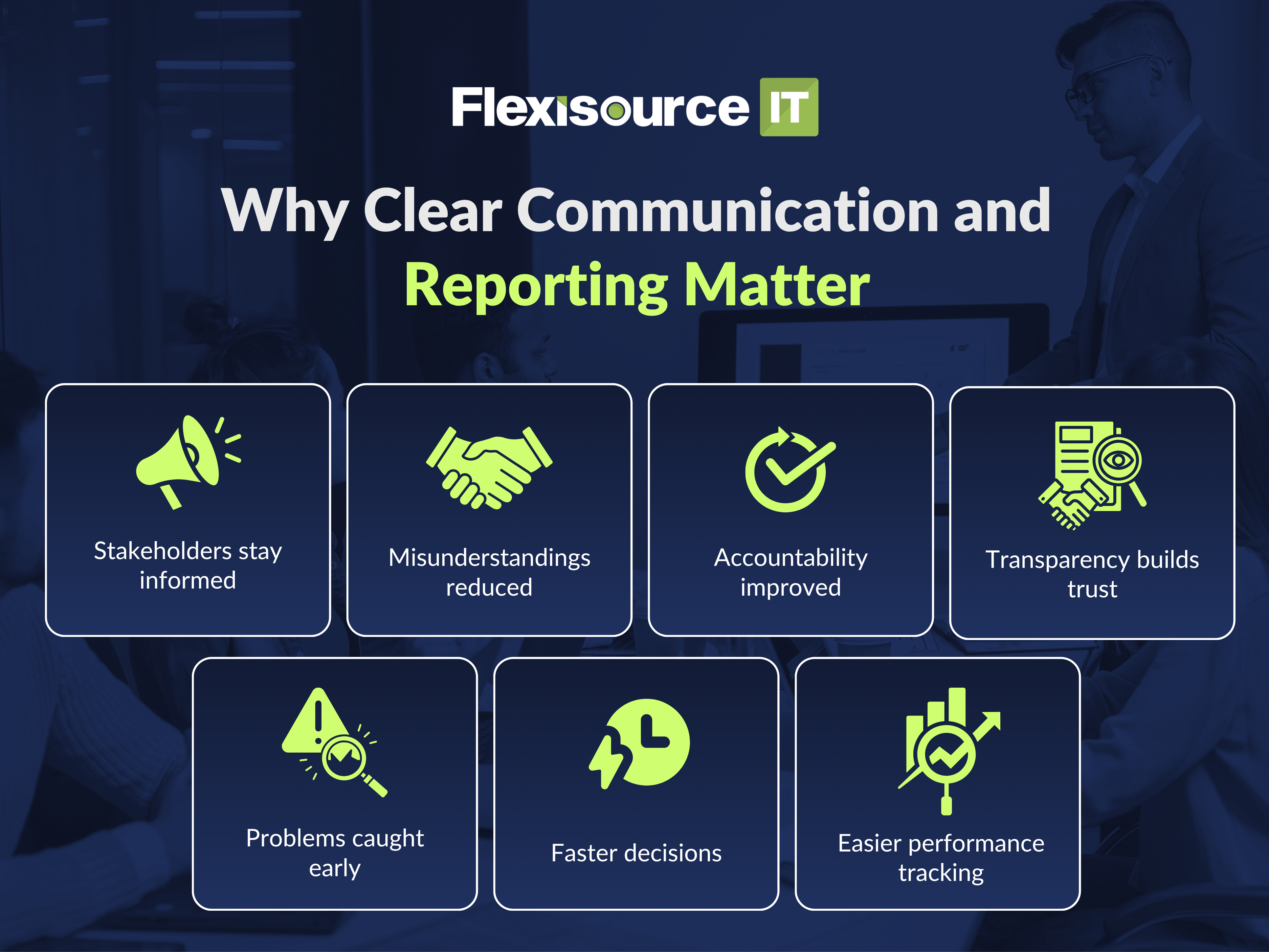
Some of the biggest benefits of effective managed IT communication include:
- Keeping stakeholders informed about ongoing work
- Reducing misunderstandings and unnecessary delays
- Improving accountability across both teams
- Building trust through transparency
- Identifying potential issues before they become major problems
- Supporting faster business decisions
- Making IT performance easier to measure and improve
Managed IT Communication at a Glance
Here are the types of communication businesses should expect from a well-managed IT partnership.
| Communication Type | Purpose | Typical Frequency |
| Incident Updates | Keep stakeholders informed during outages or critical issues | Real time |
| Ticket Updates | Share progress on support requests | As milestones are reached |
| Weekly Check-ins | Review priorities, open work, and upcoming activities | Weekly |
| Monthly Performance Reports | Measure service quality and IT performance | Monthly |
| Quarterly Business Reviews | Discuss strategy, risks, improvements, and future planning | Quarterly |
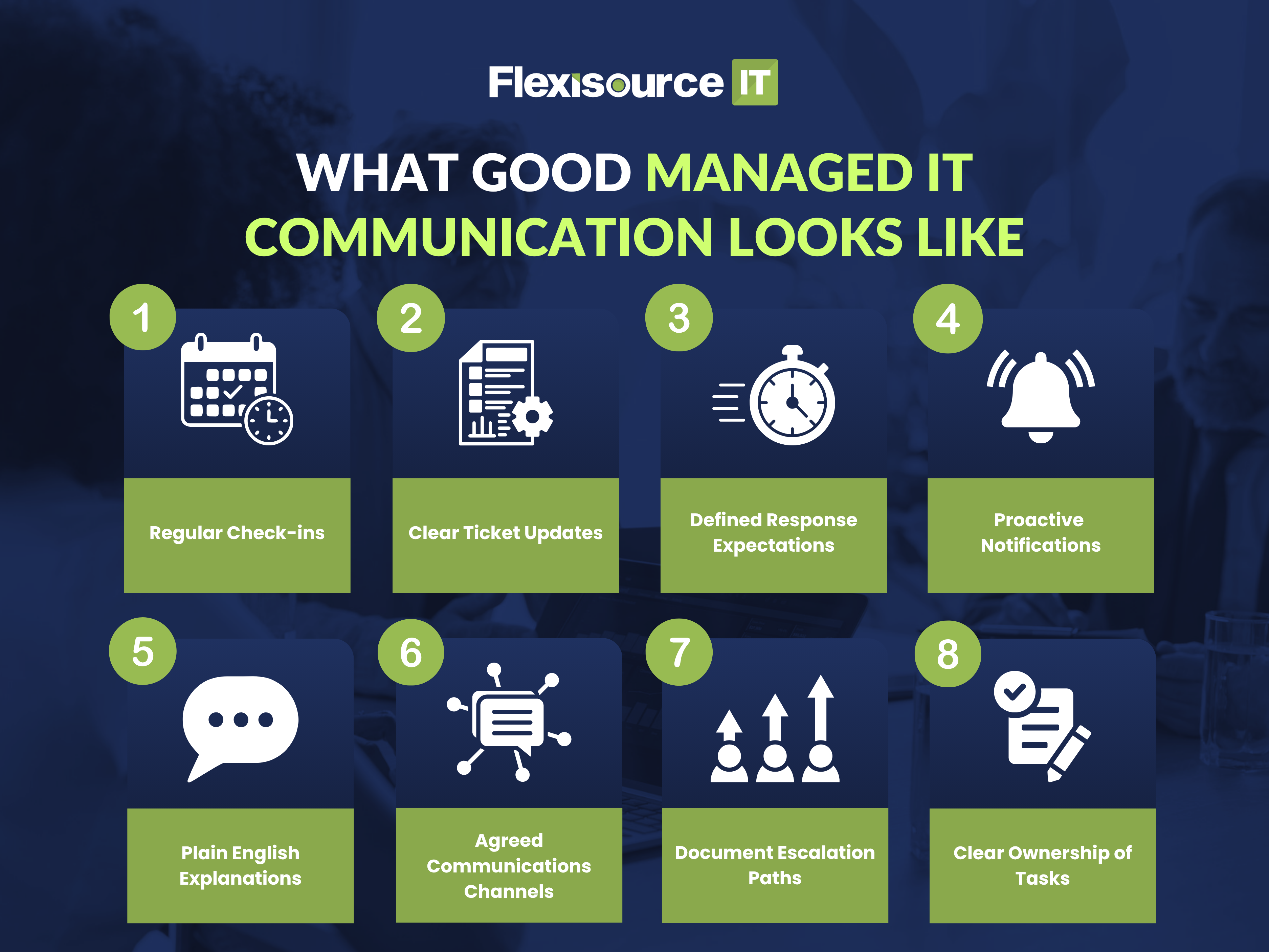
8 Signs of Strong Managed IT Communication
Effective communication should be consistent, proactive, and easy to understand. Businesses should never have to chase their managed IT provider for updates or wonder who is responsible for resolving an issue.
The strongest managed IT partnerships follow clear communication processes that keep everyone aligned while making it easy to monitor progress and resolve issues quickly.
Regular Check-Ins
Regular meetings help both teams review priorities, discuss ongoing work, and address any concerns before they become larger issues. Even short check-ins can improve collaboration and ensure everyone remains aligned on business objectives.
Clear Ticket Updates
Support requests should include regular progress updates rather than remaining unchanged until they are closed. Clients should always know who is working on an issue, what has been completed, and what the next steps are.
Defined Response Expectations
Businesses should understand how quickly different types of requests will receive a response. Clear expectations help reduce uncertainty and ensure urgent issues receive the appropriate level of attention.
Proactive Notifications
A managed IT team should notify clients about planned maintenance, service interruptions, security risks, and emerging issues before they impact business operations whenever possible.
Plain-English Explanations
Not every stakeholder has a technical background. Good managed IT teams explain technical issues in clear, straightforward language so business leaders can make informed decisions without needing specialist knowledge.
Agreed Communication Channels
Everyone should know where communication takes place, whether through email, Microsoft Teams, Slack, phone calls, a service portal, or another agreed platform. Consistency helps prevent important information from being missed.
Documented Escalation Paths
When issues become more serious, businesses should know exactly who will be contacted, how escalation works, and what response times to expect.
Clear Ownership of Tasks
Every issue should have a clearly assigned owner responsible for coordinating work, providing updates, and ensuring the issue reaches resolution. Clear ownership improves accountability and reduces confusion throughout the support process.
What Should Be Included in Managed IT Reporting?
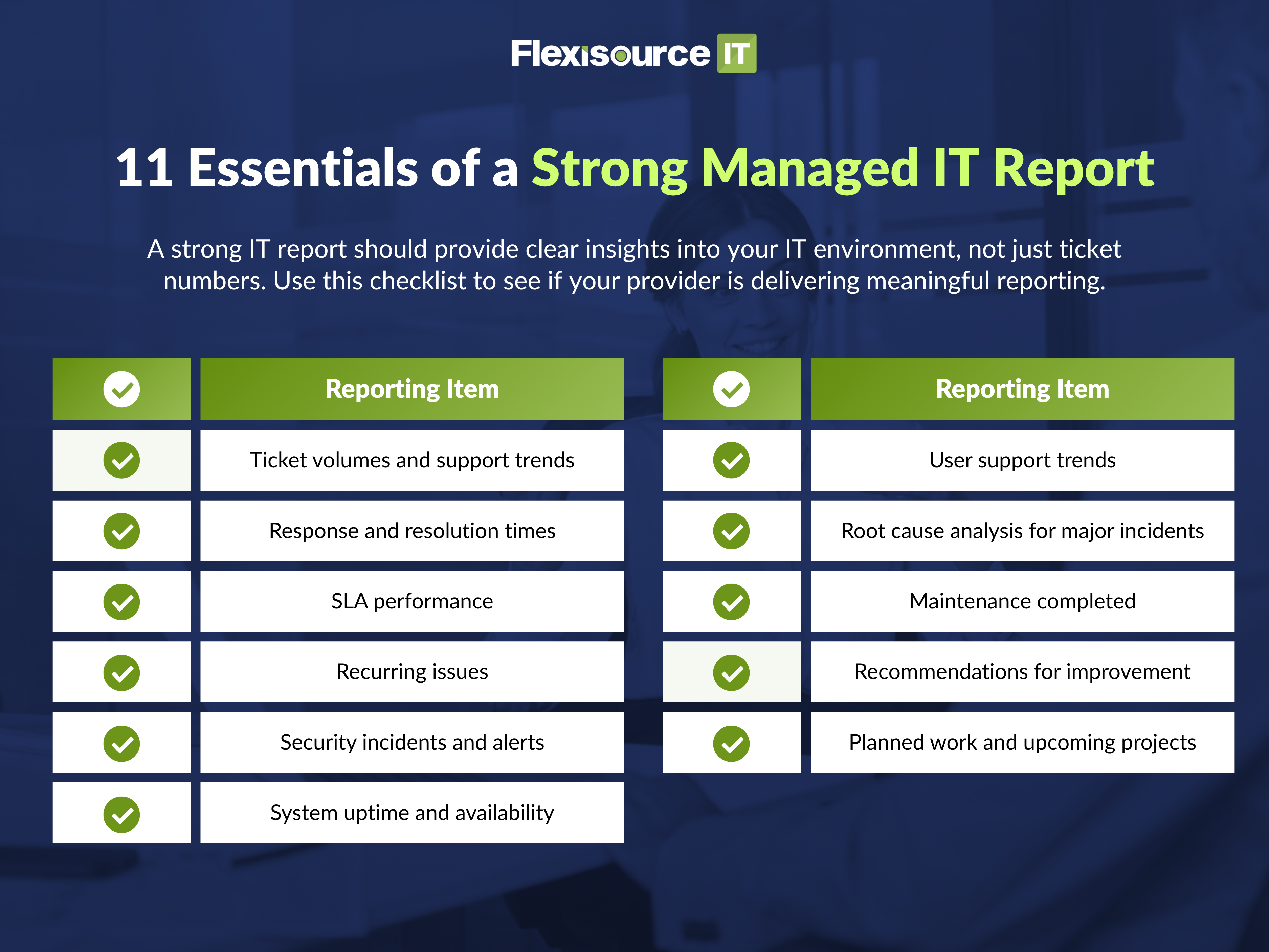
Good reporting should do more than list completed support tickets. It should give businesses a clear understanding of how their IT environment is performing, what issues are emerging, and where improvements can be made. The best reports combine technical information with practical business insights that help decision-makers plan ahead with confidence.
Rather than overwhelming clients with raw data, managed IT reporting should highlight meaningful trends, explain what they mean, and recommend actions where appropriate.
Ticket Volume and Trends
Reporting should show how many support requests were received during the reporting period and whether ticket volumes are increasing, decreasing, or remaining stable. Looking at these trends helps businesses identify recurring operational challenges and understand where additional training or system improvements may be needed.
Response and Resolution Times
Businesses should be able to see how quickly the managed IT team acknowledged and resolved support requests. Tracking these metrics helps measure service quality and confirms whether agreed response targets are being achieved consistently.
SLA Performance
If service level agreements (SLAs) are in place, reports should clearly show how the managed IT provider performed against those commitments. This allows businesses to evaluate service quality using measurable data rather than assumptions.
Recurring Issues
Good reporting should identify problems that continue to appear instead of treating each support ticket as an isolated incident. Recognising recurring issues allows both teams to investigate the underlying cause and implement long-term solutions.
Incident Summaries and Root Cause Analysis
Major incidents should include more than a description of what happened. Reports should explain the root cause, the actions taken to resolve the issue, and the measures being implemented to reduce the likelihood of similar incidents occurring again.
Security Alerts and Risks
Security reporting helps businesses stay aware of potential threats before they become serious problems. This may include unusual login activity, phishing attempts, software vulnerabilities, failed backups, or other cybersecurity concerns that require attention.
System Uptime and Availability
Reliable infrastructure is a key part of managed IT services. Reports should include system availability, downtime, and any planned maintenance completed during the reporting period so businesses understand how well their critical systems are performing.
User Support Trends
Support reports should highlight which departments or users require the most assistance, the types of requests being submitted, and whether additional user training could reduce future support demand.
Recommendations for Improvement
One of the most valuable parts of any managed IT report is the recommendation section. Instead of simply reporting past activity, the managed IT team should suggest practical improvements that strengthen security, improve performance, or increase operational efficiency.
Upcoming Maintenance and Project Updates
Reports should also give businesses visibility into planned maintenance, scheduled upgrades, ongoing projects, and upcoming work. Knowing what is planned helps stakeholders prepare for changes and reduces unexpected disruptions.
What Every Monthly Managed IT Report Should Include
A monthly report should give business leaders a complete picture of their IT environment rather than simply showing how many tickets were closed. Use this checklist to evaluate whether your current managed IT provider is delivering meaningful reporting.
Reactive vs Proactive IT Reporting
Not all reporting delivers the same value. Some managed IT providers only communicate after an issue has already affected the business, while others use reporting to identify risks, highlight trends, and recommend improvements before problems occur.
The difference between reactive and proactive reporting often determines whether IT simply supports the business or actively helps it improve.
| Reactive Reporting | Proactive Reporting |
| Reports issues after they occur | Identifies risks before they become incidents |
| Focuses on closed support tickets | Highlights trends and improvement opportunities |
| Reviews past performance | Helps plan future improvements |
| Provides limited recommendations | Includes practical, actionable recommendations |
| Responds to business problems | Helps prevent business problems |
A proactive managed IT team does more than resolve incidents. It uses reporting to spot recurring patterns, strengthen security, improve system reliability, and support better business decisions. Instead of constantly reacting to problems, businesses can take action earlier and reduce operational risk over time.
How Often Should Your Managed IT Team Provide Updates?
There is no single communication schedule that suits every business. The right reporting cadence depends on the type of support being provided, the complexity of your IT environment, and how critical technology is to your daily operations. However, a well-managed IT partnership should follow a structured communication plan that keeps stakeholders informed without overwhelming them with unnecessary updates.
| Update Type | Recommended Frequency | Why It Matters |
| Critical incidents | Immediate or real time | Enables faster response and minimises business disruption |
| Active support tickets | Daily or whenever progress changes | Keeps stakeholders informed throughout issue resolution |
| Operational check-ins | Weekly | Reviews priorities, open work, and upcoming tasks |
| Performance reports | Monthly | Measures service quality, trends, and overall IT performance |
| Strategic business reviews | Quarterly | Supports long-term planning, risk management, and continuous improvement |
Critical Incidents
When a major outage, cybersecurity event, or other high-priority issue occurs, communication should begin immediately. Businesses should not have to ask whether someone is working on the problem or wait hours for an update.
A well-managed IT team provides regular progress updates throughout the incident, explains the expected impact on the business, and communicates when services have been restored. Keeping stakeholders informed during critical situations builds confidence and allows the business to respond more effectively.
Active Support Tickets
Not every support request requires constant communication, but clients should receive updates whenever meaningful progress is made. This includes confirming that a ticket has been received, explaining what is being investigated, and notifying the client when additional information or action is required.
Consistent ticket updates reduce uncertainty and help users feel confident that their requests are being actively managed rather than sitting unnoticed in a queue.
Weekly Operational Check-Ins
Weekly meetings are valuable for businesses with ongoing projects, dedicated offshore teams, or high support volumes. These sessions provide an opportunity to review completed work, discuss outstanding issues, confirm upcoming priorities, and address any concerns before they grow into larger problems.
Even a short meeting can improve alignment between both teams and keep projects moving in the right direction.
Monthly Performance Reports
Monthly reporting gives business leaders a broader view of how their managed IT services are performing. Rather than focusing on individual support requests, these reports should highlight service trends, SLA performance, recurring issues, security updates, completed maintenance, and recommendations for improvement.
Regular performance reporting helps businesses measure value over time and make informed decisions about future technology investments.
Quarterly Business Reviews
Quarterly Business Reviews (QBRs) move the conversation beyond day-to-day support and focus on long-term strategy. These meetings should review overall service performance, discuss emerging risks, evaluate technology investments, and identify opportunities to improve security, efficiency, and business outcomes.
A QBR also gives both parties the chance to review changing business priorities and ensure the managed IT strategy continues to support organisational goals.
Common Communication Problems to Avoid
Even technically capable managed IT providers can create frustration if communication is inconsistent or unclear. Recognising these warning signs early can help businesses address issues before they begin affecting service quality or business operations.
Unclear Ticket Ownership
Every support request should have a clearly assigned owner who is responsible for coordinating work and providing updates. When ownership is unclear, issues can be delayed, duplicated, or forgotten altogether.
Delayed Updates
Long periods of silence often create unnecessary concern, especially during high-priority incidents. Even if an issue has not yet been resolved, regular progress updates reassure stakeholders that work is continuing and expectations are being managed.
Overly Technical Explanations
Business leaders do not always need deep technical detail. Managed IT teams should explain issues in plain English, focusing on business impact, risks, and recommended actions instead of unnecessary technical jargon.
No Escalation Process
Businesses should always know what happens when an issue becomes more serious. A documented escalation process ensures urgent incidents receive the appropriate level of attention and are communicated to the right stakeholders without delay.
Reports That Do Not Show Business Impact
Reports filled with technical metrics but lacking context make it difficult for decision-makers to understand whether IT performance is actually improving. Good reporting explains why the data matters and how it affects business operations.
No Proactive Recommendations
A managed IT provider should do more than report completed work. They should regularly identify opportunities to improve security, reduce operational risks, optimise systems, and support future business growth.
Poor Documentation
Incomplete documentation can slow issue resolution and make future maintenance more difficult. Keeping accurate records of systems, processes, and previous incidents helps both teams work more efficiently over time.
Lack of Visibility Into Recurring Issues
If the same problems continue appearing month after month, reporting should clearly identify the pattern and recommend a permanent solution. Addressing root causes instead of repeatedly fixing symptoms leads to better long-term outcomes.
Questions to Ask Your Managed IT Provider
Choosing a managed IT provider is about more than comparing prices or service offerings. The right partner should communicate clearly, provide meaningful reporting, and demonstrate how they will support your business over the long term.
Asking the right questions before signing an agreement can help you understand how the provider operates and whether their approach aligns with your expectations.
Consider asking the following questions during your evaluation process:
- How often will I receive service updates and performance reports?
- Who will communicate with us during critical incidents?
- What information is included in your monthly managed IT reports?
- How do you measure and report SLA performance?
- How do you identify and address recurring IT issues?
- What happens when an issue needs to be escalated?
- Will you provide proactive recommendations, not just technical support?
- Who will be our primary point of contact?
- How quickly will we be notified about security incidents or outages?
- How do your reports show business impact instead of just technical metrics?
The answers to these questions will quickly show whether a provider values transparency and long-term partnership or simply focuses on closing support tickets. A managed IT team should make it easy for your business to stay informed, understand performance, and plan for the future.
Choosing a Managed IT Partner That Keeps You Informed
Technical expertise is important, but it is only one part of a successful managed IT partnership. Businesses also need a provider that communicates openly, reports consistently, and works proactively to support long-term success.
At Flexisource IT, we believe clients should never have to wonder what is happening behind the scenes. Our goal is to provide complete visibility so businesses can make confident technology decisions.
Dedicated Communication and Account Management
Every business benefits from having clear points of contact who understand its goals, priorities, and IT environment. Flexisource IT provides structured communication channels and dedicated account management to ensure questions are answered quickly and updates are delivered consistently.
This creates stronger working relationships and allows clients to spend less time chasing information and more time focusing on their business.
Transparent Reporting That Supports Better Decisions
Reporting should help businesses understand what is happening, why it matters, and what improvements should come next. Rather than simply listing completed tickets, Flexisource IT provides meaningful reporting that highlights service performance, recurring issues, security considerations, ongoing projects, and opportunities to improve operational efficiency.
These insights help business leaders make informed decisions instead of relying on assumptions or incomplete information.
Offshore IT Teams Aligned With Australian Business Hours
Communication becomes much easier when your support team works in alignment with your business. Flexisource IT builds dedicated offshore IT teams that work closely with Australian organisations, providing strong English communication, structured reporting, and support that fits Australian business hours.
With regular collaboration and minimal time zone differences, clients benefit from faster communication, better responsiveness, and a more connected working relationship.
Read: The AUD Advantage: A Smarter Time to Offshore
Proactive Support That Goes Beyond Closing Tickets
The best managed IT providers do more than respond to problems after they happen. Flexisource IT focuses on identifying trends, monitoring system health, recommending improvements, and helping clients reduce future risks before they affect business operations.
By combining proactive support with consistent communication and transparent reporting, we help businesses build a more reliable, secure, and scalable IT environment over the long term.
Frequently Asked Questions About Managed IT Team Communication
- How should a managed IT team communicate with clients?
Through regular updates, clear reporting, agreed communication channels, and proactive notifications.
- How often should a managed IT provider provide reports?
Most businesses benefit from monthly performance reports and quarterly business reviews, with immediate updates for critical incidents.
- What should be included in managed IT reporting?
Reports should include ticket trends, SLA performance, response times, security updates, recurring issues, system uptime, and improvement recommendations.
- How do you measure managed IT team performance?
Performance is typically measured using SLAs, response times, resolution times, customer satisfaction, system availability, and service trends.
- What are signs of poor communication from an IT provider?
Delayed updates, unclear ownership, weak reporting, poor documentation, and no proactive recommendations are common warning signs.
- Why is proactive reporting important?
It helps businesses identify risks early, improve IT performance, and make better technology decisions before issues become major problems.
Final Thoughts
A managed IT partnership should provide far more than technical support. Clear communication, structured reporting, and proactive recommendations give businesses the visibility they need to make informed decisions, reduce operational risks, and measure the value of their IT investment.
The best managed IT providers keep clients informed at every stage, from day-to-day support requests to long-term technology planning. Regular updates, meaningful reports, and transparent communication create stronger partnerships built on trust, accountability, and continuous improvement.
If you’re looking for a managed IT team that keeps you informed instead of leaving you in the dark, Flexisource IT can help. We build dedicated offshore IT support teams that combine technical expertise with clear communication, transparent reporting, and proactive support, helping Australian businesses stay connected, secure, and in control.
Read next: