As AI becomes part of everyday software development, outsourcing is evolving from a cost-saving model into a strategic partnership focused on innovation, scalability, and technical expertise. Businesses that combine AI with skilled offshore teams will be better positioned to deliver software faster without compromising quality.
At Flexisource IT, we help Australian businesses build AI-enabled offshore teams that combine modern development tools with human expertise. In this guide, you’ll learn how AI is reshaping IT outsourcing, what questions technology leaders should be asking, and how to prepare for the future of software development.
Why “Will AI Kill Outsourcing?” Is the Wrong Question
Headlines predicting that artificial intelligence will eliminate outsourcing often oversimplify what’s actually happening.
While AI is transforming how software is built and managed, it isn’t replacing the need for experienced development teams. Instead, it’s changing the type of work businesses outsource and the value they expect from outsourcing partners.
For Australian CTOs, the focus should move beyond whether outsourcing will survive. A more valuable question is how AI can improve delivery, increase productivity, and help engineering teams solve more complex business problems.
AI Is Changing Work, Not Eliminating It
AI is highly effective at automating repetitive and time-consuming tasks. Developers can now generate boilerplate code, create documentation, identify bugs, and accelerate testing using AI-powered tools. These capabilities reduce manual effort and allow teams to complete routine work more efficiently.
However, software development involves far more than writing code. Successful projects still require technical architecture, solution design, business analysis, security planning, quality assurance, and collaboration with stakeholders.
These responsibilities depend on human expertise, critical thinking, and informed decision-making, areas where AI continues to support rather than replace professionals.
Instead of reducing the need for developers, AI enables them to spend more time on higher-value work that directly contributes to business success.
From Labour Arbitrage to Value Creation
For many years, businesses viewed IT outsourcing primarily as a way to reduce development costs. While cost efficiency remains important, Australian organisations are increasingly looking for outsourcing partners that deliver strategic value alongside technical capability.
Today’s outsourcing relationships focus on outcomes rather than simply providing additional resources. Businesses want partners who can:
- Accelerate software delivery using AI-assisted workflows.
- Recommend the right technologies and development approaches.
- Improve software quality through automation and best practices.
- Scale engineering teams quickly without compromising standards.
- Contribute ideas that support long-term digital transformation.
As AI improves productivity across software development, the competitive advantage shifts from lower labour costs to the ability to deliver better results faster.
Why Australian CTOs Need a Different Mindset
AI is changing the responsibilities of technology leaders just as much as it is changing software development. Rather than asking whether AI will replace outsourced teams, CTOs should evaluate how AI fits into their broader technology strategy.
Modern technology leaders need to consider questions such as:
- Which tasks should AI automate?
- Where does human expertise create the greatest value?
- How can AI improve developer productivity without affecting quality?
- Does our outsourcing partner use AI responsibly and securely?
- How do we combine AI with experienced engineering talent to achieve better outcomes?
Businesses that ask these questions are more likely to build resilient technology teams capable of adapting as AI continues to evolve.
How AI Is Reshaping IT Outsourcing
AI is influencing every stage of the software development lifecycle, from planning and coding to testing and ongoing maintenance. Rather than replacing outsourcing, it is changing how offshore teams work, collaborate, and deliver value.
The most successful outsourcing providers are integrating AI into their development processes while continuing to rely on experienced engineers to guide technical decisions and ensure quality outcomes.
Routine Tasks Are Becoming Automated
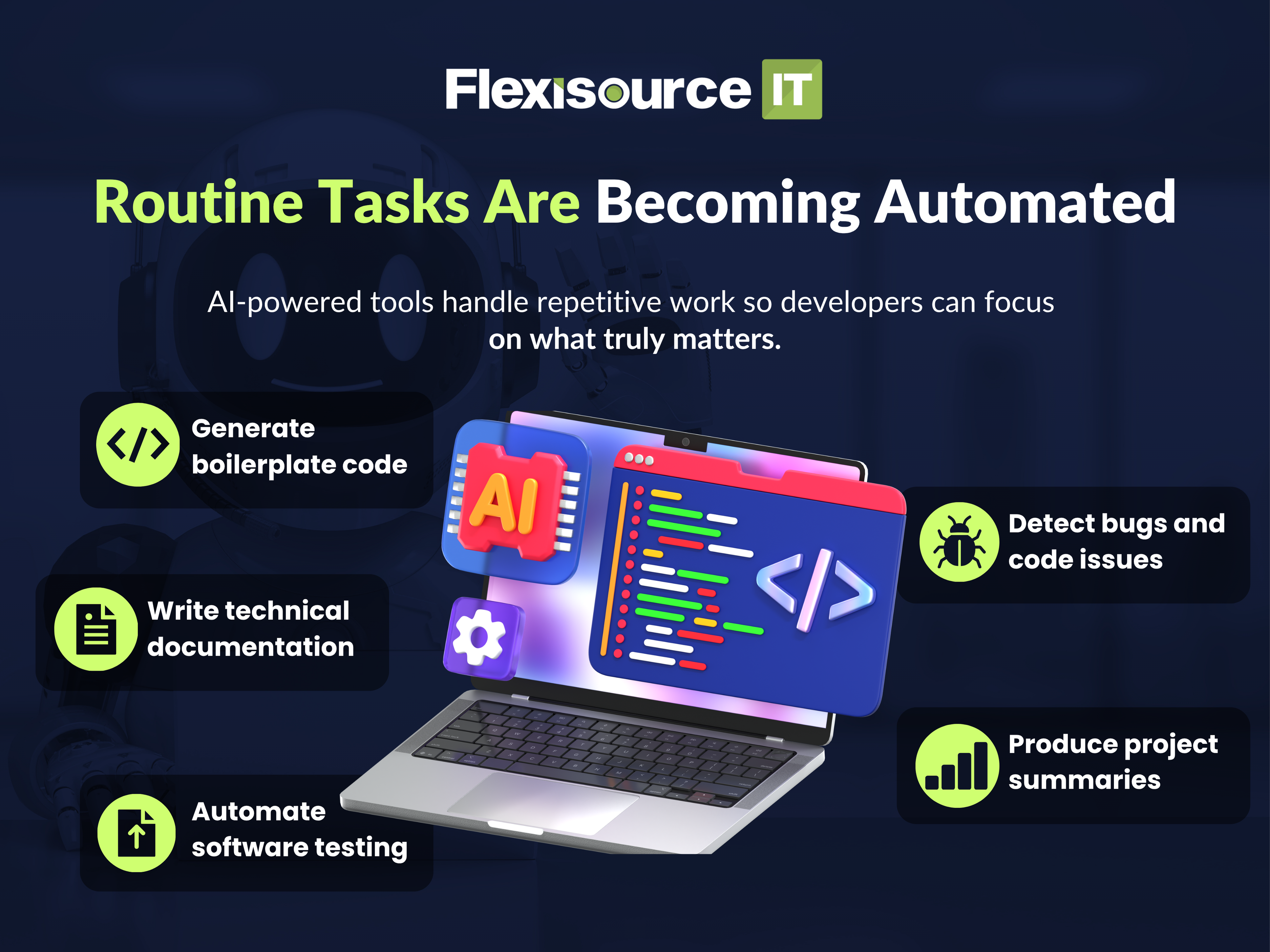
Many repetitive software development activities can now be completed more efficiently using AI-powered tools. This allows developers to spend less time on manual work and more time solving complex business challenges.
Common examples include:
- Generating boilerplate code.
- Writing technical documentation.
- Automating software testing.
- Detecting bugs and code issues.
- Producing project summaries and reports.
Automating these tasks helps teams deliver projects more efficiently while maintaining consistency across the development process.
While AI can automate many development activities, experienced engineers remain essential for architecture, security, technical decision-making, and aligning software with business goals. As routine work becomes more automated, human expertise becomes even more valuable. Read: Why Human Talent Still Matters in AI-Driven Outsourcing Human Expertise Is Becoming More Valuable
Outsourcing Partners Are Becoming AI-Enabled Teams
The role of an outsourcing provider is also evolving. Businesses no longer expect providers to simply supply additional developers. Instead, they want teams that combine technical expertise with modern AI tools to improve delivery speed and software quality.
An AI-enabled outsourcing partner uses technology to increase efficiency while ensuring experienced engineers remain responsible for reviewing code, validating outputs, solving complex problems, and maintaining development standards.
This approach allows businesses to benefit from faster delivery without sacrificing collaboration, quality, or accountability.
The Five Questions Every Australian CTO Should Ask Instead
Rather than asking whether AI will replace IT outsourcing, Australian CTOs should focus on how AI can help their teams work smarter and deliver better business outcomes. Asking the right questions leads to stronger technology decisions and more effective outsourcing partnerships.
Which Tasks Should AI Handle?
Not every development task requires human effort. AI is well suited to repetitive, rules-based activities that consume valuable engineering time.
Examples include:
- Code generation
- Unit testing
- Documentation
- Code reviews
- Routine debugging
Automating these activities allows developers to concentrate on higher-value engineering work that requires creativity and technical expertise.
Which Work Still Requires Experienced Engineers?
AI supports development, but experienced engineers remain responsible for technical decisions, solution design, security, and aligning software with business goals. These are areas where human judgement continues to outperform automation.
How Can AI Improve Team Productivity?
AI delivers the greatest productivity gains when it removes repetitive work while experienced developers focus on architecture, problem-solving, and innovation. Rather than replacing engineers, AI helps them work more efficiently and consistently, allowing teams to deliver projects faster without compromising quality.
Some of the most valuable applications of AI include:
- Automating routine coding tasks.
- Improving code consistency.
- Supporting faster knowledge sharing across development teams.
The biggest benefits come from combining AI with experienced engineers who can validate outputs, apply business context, and make informed technical decisions.
Which Capabilities Should Stay In-House?
As AI changes software development, Australian businesses must decide which capabilities should remain within their organisation and which can be supported by outsourcing partners.
Functions that typically stay in-house include:
- Technology strategy and roadmap planning.
- Product vision and business priorities.
- Executive decision-making.
- Customer relationships.
- Governance and compliance oversight.
Meanwhile, specialist software development, quality assurance, cloud engineering, DevOps, cybersecurity, and application support can often be delivered effectively through dedicated offshore teams working closely with internal stakeholders.
Finding the right balance allows businesses to remain agile while making the best use of both internal expertise and external capability.
Does My Outsourcing Partner Use AI Responsibly?
AI should improve software development without compromising quality, security, or accountability. Before selecting an outsourcing provider, CTOs should understand how AI is being used throughout the development process.
Consider asking questions such as:
- How is AI integrated into your development workflow?
- What safeguards are in place to review AI-generated code?
- How do you protect confidential business information?
- Which development tasks are automated, and which remain human-led?
- How do your engineers validate AI-generated outputs?
The answers reveal whether a provider is using AI as a productivity tool or relying on it without appropriate oversight.
What AI Can’t Replace in Software Development
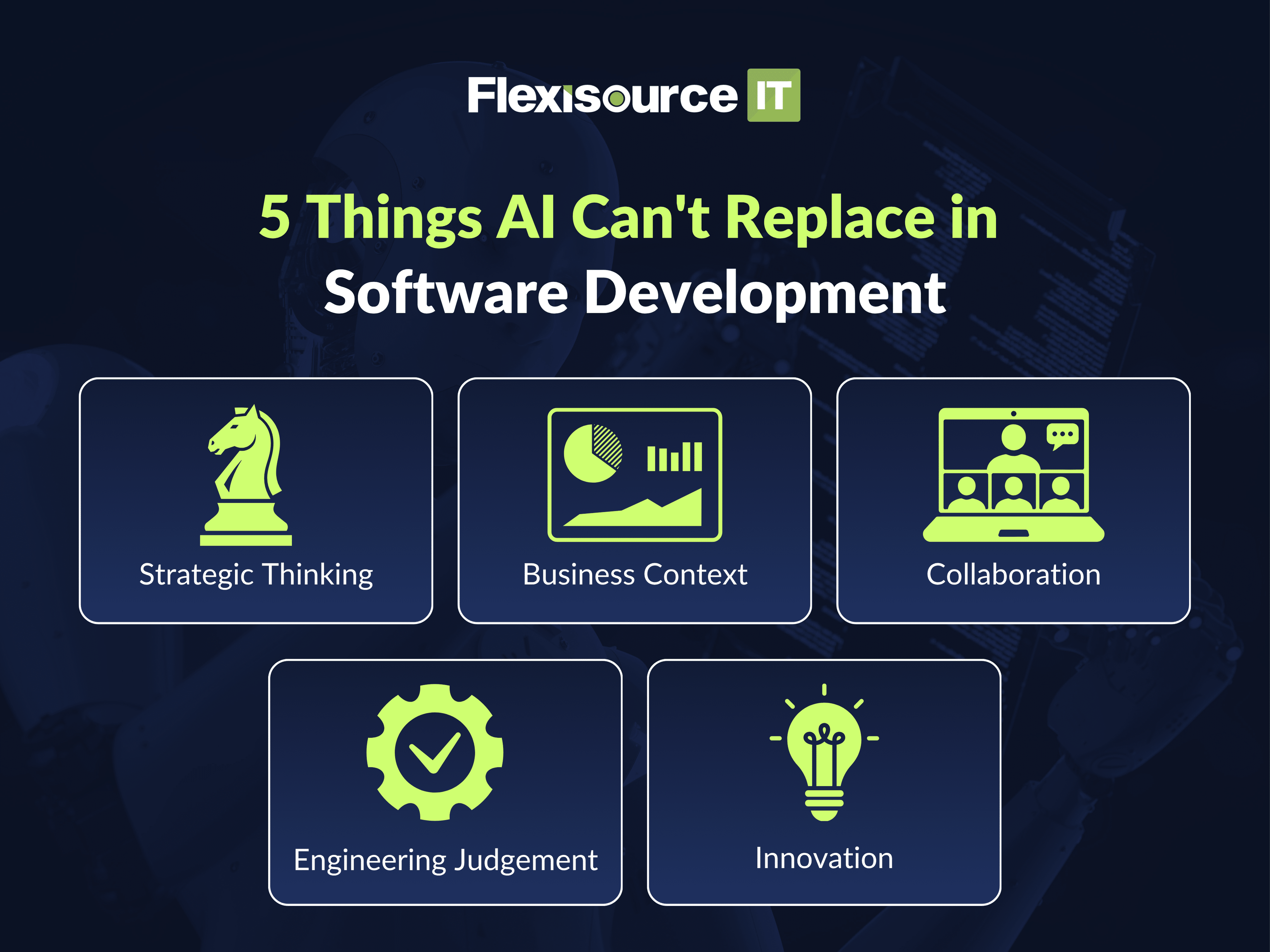
AI continues to improve rapidly, but it still has clear limitations. Successful software projects rely on strategic thinking, collaboration, and technical judgement that extend well beyond generating code.
Understanding these limitations helps businesses make better decisions about where AI adds value and where experienced professionals remain essential.
Strategic Thinking
Software development begins with understanding business goals, user needs, and long-term objectives. AI can analyse information and generate suggestions, but it cannot define a technology strategy or prioritise initiatives based on organisational goals.
Experienced technology leaders and engineers remain responsible for making decisions that shape the direction and success of a project.
Business Context
Every organisation has unique workflows, customers, regulations, and commercial priorities. AI can process existing information but cannot fully understand the broader business context that influences development decisions.
Developers bridge the gap between technology and business by designing solutions that support real operational needs rather than simply producing functional code.
Collaboration
Building successful software requires continuous collaboration between developers, designers, stakeholders, and end users. Requirements evolve, priorities shift, and new challenges emerge throughout the project.
Strong communication, teamwork, and relationship management remain essential to delivering software that meets business expectations.
Engineering Judgement
AI can suggest solutions, but it cannot consistently determine the best architectural approach, evaluate technical trade-offs, or identify long-term risks.
Experienced engineers apply professional judgement when selecting technologies, designing scalable systems, reviewing code quality, and ensuring software remains secure, maintainable, and reliable.
Innovation
AI learns from existing information, whereas innovation often involves creating entirely new ideas, solving unfamiliar problems, and identifying opportunities that have never existed before.
Businesses still depend on creative thinking and human expertise to develop products that differentiate them from competitors and create lasting value.
How Australian Businesses Can Prepare Today
Rather than viewing AI as a threat to outsourcing, Australian businesses should see it as an opportunity to improve the way software is planned, developed, and delivered. Preparing now will help organisations maximise AI’s benefits while continuing to leverage the expertise of skilled development teams.
A practical starting point includes:
- Identifying repetitive tasks that AI can automate.
- Investing in upskilling developers to work effectively with AI tools.
- Strengthening governance around AI usage, security, and data privacy.
- Building development teams that combine AI capabilities with experienced engineering talent.
- Choosing outsourcing partners that use AI responsibly while maintaining human oversight.
Organisations that embrace this balanced approach will be better positioned to innovate, improve delivery, and remain competitive as AI continues to evolve.
How Flexisource IT Helps Businesses Build AI-Enabled Offshore Teams
AI is most effective when combined with experienced professionals who understand how to apply it responsibly. At Flexisource IT, we help Australian businesses build dedicated offshore development teams that use AI to improve productivity while maintaining the quality, collaboration, and accountability required for successful software delivery.
Experienced Developers Who Use AI Responsibly
Our engineers use AI to streamline routine development tasks, but every solution is reviewed, tested, and refined by experienced professionals. Human expertise remains central to every project we deliver.
AI-Augmented Development Without Losing Human Oversight
We combine AI-powered tools with established development practices to accelerate delivery while maintaining code quality, security, and technical standards. Every decision is guided by experienced engineers who understand your business objectives.
Flexible Teams That Scale With Your Business
Whether you’re expanding an existing engineering team or launching a new software initiative, our dedicated offshore professionals integrate seamlessly into your organisation. As your business grows, your team can scale quickly while benefiting from AI-enabled development workflows.
Final Thoughts: AI Won’t Replace Outsourcing, But Will Redefine It
The future of AI in IT outsourcing isn’t about replacing people, it’s about helping people work smarter. While AI is transforming software development through automation and greater efficiency, experienced engineers remain essential for strategic thinking, collaboration, innovation, and technical decision-making.
For Australian CTOs, the focus should shift from asking whether AI will eliminate outsourcing to understanding how AI can strengthen development teams and improve business outcomes. Organisations that combine AI with skilled engineering talent will be better positioned to innovate, scale, and respond to changing market demands.
If you’re looking to build an AI-enabled offshore development team, Flexisource IT can help. We partner with Australian businesses to deliver experienced software professionals who use AI responsibly, integrate seamlessly with your organisation, and support your long-term technology goals.
Contact us today to discover how AI-enabled outsourcing can help your business grow.
Read next:
- Legal Agreements and Contracts for IT Outsourcing
- Why Flexisource IT Beats Upwork for IT Outsourcing in the Philippines
- How to Hire AI Developers
- Top Information Technology & Communication Trends Transforming Australian Businesses in 2026
- What is Adaptive Software Development? A Guide for Aussie Startups