
Many businesses carefully review pricing, hiring timelines, replacement terms and intellectual property, but overlook how knowledge, access, documentation and project continuity will be handled during exit. In offshore IT staff augmentation, this can create avoidable risk because distributed teams often hold important technical and operational context by the time the engagement finishes.
A strong contract should not only explain how the partnership begins. It should also make clear how people, systems, work-in-progress and knowledge are transitioned if the business relationship changes. For legal and procurement teams, offboarding is not just an HR step. It is a contract, security and business continuity issue.
At Flexisource IT, we help Australian businesses build dedicated offshore technology teams with clear engagement structures, transparent processes and practical support from onboarding through offboarding.
Why Offboarding Matters More Than Most Businesses Realise
Offboarding often gets treated as an administrative task, but in staff augmentation, it can directly affect project continuity, security and operational stability. When a developer, QA specialist, cloud engineer or support professional leaves an engagement, they may take with them important knowledge about systems, workflows, product decisions and undocumented workarounds.
That risk becomes greater when offboarding terms are vague. If the contract only says either party can terminate the agreement with notice, it may not explain what happens next. Who updates the documentation? Who transfers credentials? Who completes the handover? Who supports the internal team during transition?
These details matter long before the engagement ends.
Poor Exit Terms Create Unnecessary Risk
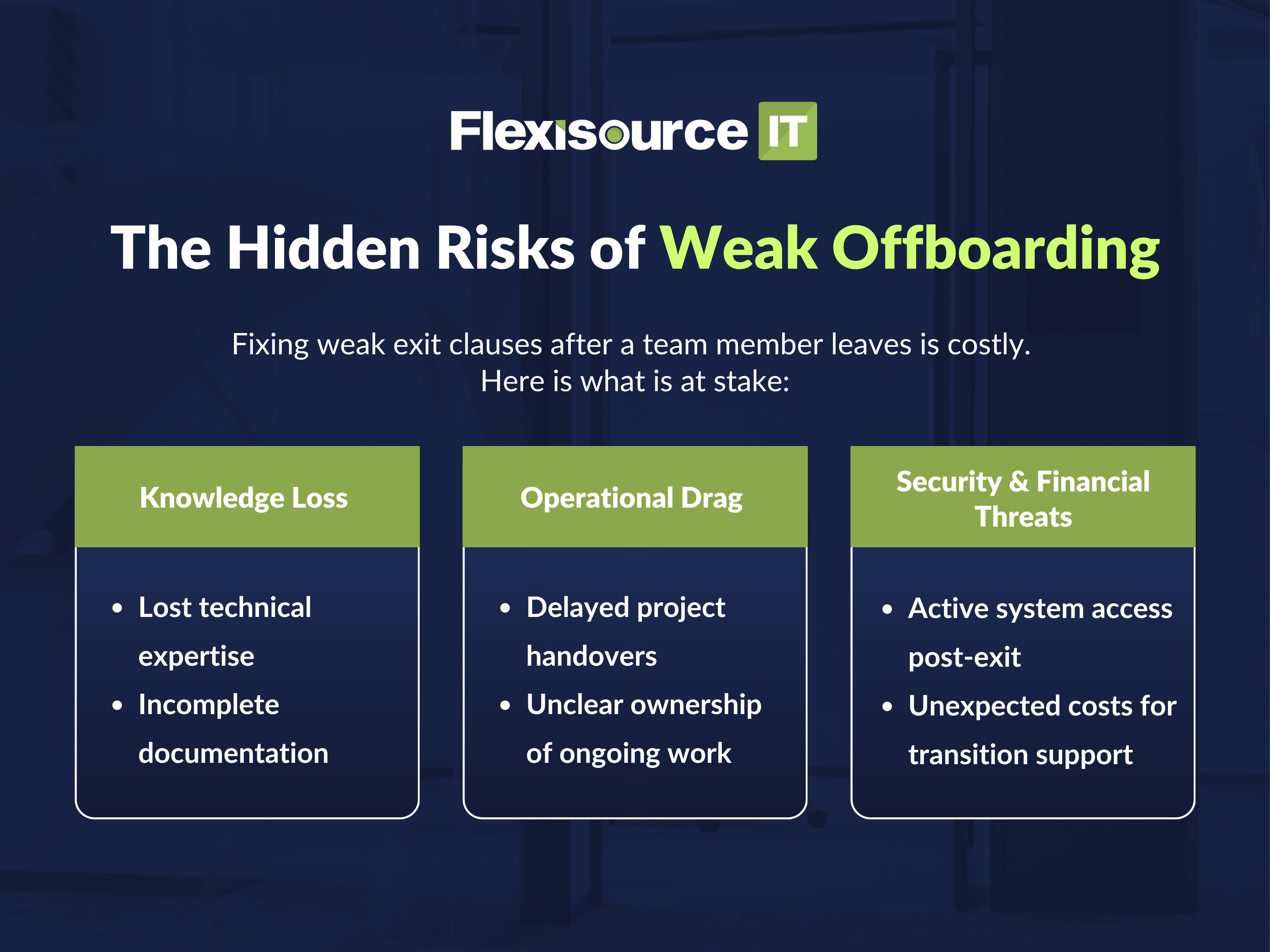
Weak offboarding clauses can lead to problems that are difficult to fix after the fact. These may include:
- Lost technical knowledge
- Incomplete documentation
- Delayed project handovers
- Unclear ownership of work-in-progress
- Active system access after a team member exits
- Additional costs for transition support
- Confusion over repositories, tools and credentials
The issue is rarely that no one intended to complete the handover. The issue is that the contract did not clearly define what offboarding should include.
When expectations are not written down, every exit becomes a negotiation. That creates pressure at the worst possible time, especially if the business is already managing a vendor change, internal restructuring or urgent project deadline.
The Offboarding Clause Most Contracts Get Wrong
The biggest mistake many staff augmentation contracts make is treating offboarding as the same thing as termination. They explain how much notice is required to end the agreement, but not how the actual transition should happen.
Those are two different things.
Termination explains when the commercial arrangement ends. Offboarding explains how the work, knowledge, access and responsibilities are transferred before the relationship closes.
A contract can have a clear termination clause and still have a weak offboarding process. That is where legal and procurement teams need to look more closely.
Read: What Are the Different Types of Staff Augmentation?
They Focus on Termination, Not Transition
Many contracts include basic termination language, such as:
- how much notice either party must give
- whether early termination fees apply
- what happens if invoices remain unpaid
- when the provider stops supplying staff
These points are important, but they do not fully protect the client.
A stronger clause should explain what happens during the transition period. For example, if a developer from a dedicated offshore IT team has been working on a product for 12 months, the business needs more than an end date. It needs current documentation, code status updates, access confirmation, task handover and time for internal or replacement staff to ask questions.
Without that structure, termination may be clean on paper but messy in practice.
A Good Offboarding Clause Defines Responsibilities
A useful offboarding clause should clearly define who is responsible for each part of the transition. It should not leave critical steps open to interpretation.
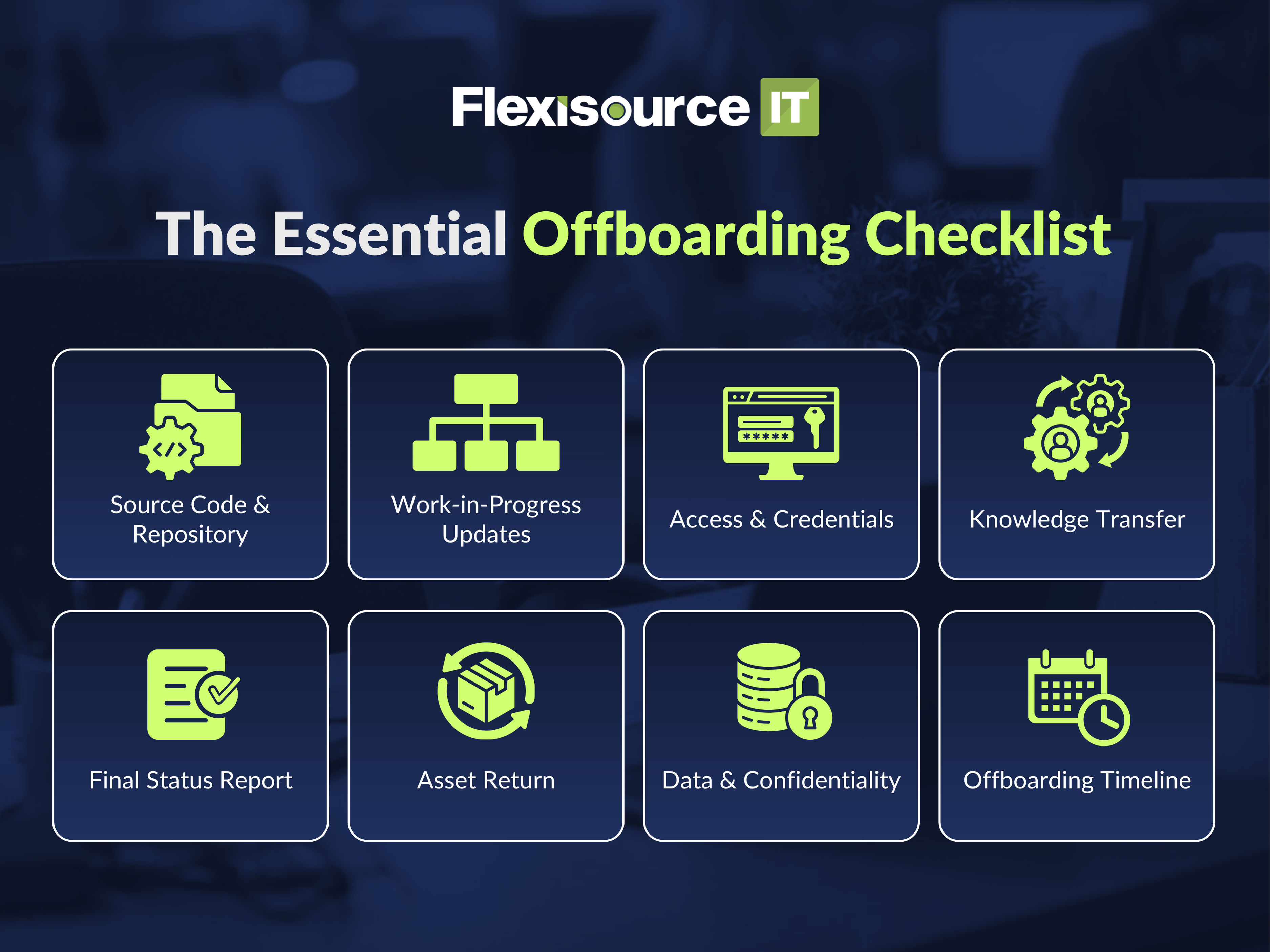
At minimum, it should address:
- Documentation handover
- Source code and repository access
- Work-in-progress updates
- Credential and system access transfer
- Knowledge transfer sessions
- Final reporting or task status updates
- Device or asset return, if applicable
- Data handling and confidentiality obligations
- Timelines for each offboarding step
This level of detail protects both sides. The client knows what support to expect, and the provider knows what must be delivered before the engagement fully ends.
In IT staff augmentation Australia, this clarity is especially important because buyers are often balancing commercial requirements, internal governance and operational risk. A clear offboarding clause reduces confusion and helps everyone manage the transition professionally.
What Procurement Teams Should Check Before Signing
Legal and procurement teams often focus on pricing, payment terms, liability, service levels and intellectual property. Those are essential, but offboarding deserves the same attention because it affects what happens after the commercial relationship changes.
Before signing an offshore staff augmentation agreement, buyers should review whether the contract answers a simple question: If this engagement ended next month, would our team have everything needed to keep operating?
If the answer is unclear, the offboarding terms need more detail.
Intellectual Property Ownership
Intellectual property ownership should be clear from the beginning of any staff augmentation engagement. This includes more than finished code. It may also include documentation, scripts, configurations, test cases, technical designs, deployment instructions and other work created during the engagement.
Procurement teams should confirm who owns:
- Source code
- Technical documentation
- Product documentation
- Test scripts and QA artefacts
- Cloud or infrastructure configurations
- Automation workflows
- Internal tools or reusable components
Ownership should not depend on whether a person is still assigned to the project. The contract should make it clear that the business retains the agreed rights to work created under the engagement and can access the relevant files, systems and repositories during transition.
Knowledge Transfer Requirements
Knowledge transfer is one of the most overlooked parts of offboarding. A developer may have followed the client’s process every day, but if their knowledge remains undocumented, the business can still lose valuable context when they leave.
A strong contract should include expectations for knowledge transfer, such as:
- Updating technical documentation
- Recording walkthroughs where appropriate
- Explaining open tasks and known issues
- Sharing deployment or support notes
- Helping onboard a replacement or internal team member
- Participating in transition meetings before the final exit date
This is especially important for a dedicated offshore IT team that has been embedded in the business over time. The longer the engagement, the more institutional knowledge the team may hold. A structured knowledge transfer process ensures that knowledge stays with the client, not only with individual team members.
System Access and Security
System access is another area that should be clearly addressed before signing an agreement. During a staff augmentation engagement, offshore team members may access code repositories, cloud environments, project management tools, communication channels, testing platforms and internal documentation.
When the engagement ends, the contract should explain how access will be reviewed and removed. This helps prevent security gaps and ensures the business maintains control over its systems.
Procurement and legal teams should check whether the agreement covers:
- Account deactivation
- Repository permissions
- Cloud access
- Credential management
- Data storage and deletion
- Confidentiality obligations after exit
- Return or removal of client assets
Clear access management protects both the client and the provider. It reduces uncertainty, supports compliance and ensures offboarding is handled as a proper security process rather than a last-minute checklist.
Why Offshore IT Staff Augmentation Requires Clear Exit Planning
Offboarding is important in any staff augmentation agreement, but it becomes even more critical when teams are offshore. Distributed work can be highly effective, but it depends on strong communication, clear documentation and shared expectations.
With offshore IT staff augmentation, people often work across different locations, time zones and systems. If the exit process is unclear, even a simple transition can become harder than necessary. A strong contract should reduce friction by making every offboarding step clear before the engagement begins.
Read: Managing Time Zone Differences When Outsourcing IT Development
Distributed Teams Need Structured Handover Processes
In a local team, some knowledge transfer may happen informally through face-to-face conversations. In offshore teams, that kind of informal handover is less reliable. Documentation, recorded walkthroughs, ticket updates and planned transition meetings become more important.
A structured handover process helps ensure that the internal team understands what has been completed, what is still in progress and what needs attention after the offshore team member exits.
This matters for legal and procurement teams because the risk is not only technical. Poor handover can affect timelines, budgets, service continuity and internal stakeholder confidence.
Dedicated Offshore IT Teams Build Long-Term Knowledge
A dedicated offshore IT team often becomes deeply familiar with the client’s products, tools, users and internal ways of working. Over time, this knowledge becomes valuable.
That is one of the strengths of staff augmentation. Offshore professionals do not simply complete isolated tasks. They become part of the delivery rhythm and develop context that helps the business move faster.
However, that also means offboarding must be handled carefully. If knowledge remains with individual team members instead of being documented and transferred, the business may lose important context when the engagement changes.
A good offboarding clause protects this knowledge by requiring clear documentation, transition support and practical handover steps.
For businesses reviewing IT staff augmentation Australia agreements, offboarding should be discussed before onboarding. Clear exit terms help legal, procurement and technology teams understand what will happen if a role changes, a project ends or the business moves to another provider. Before signing, confirm that the agreement covers: Treating offboarding as business continuity planning helps reduce disruption and protects the value created during the engagement. It also ensures your internal team is not left trying to recover project knowledge, access details or unfinished work after an offshore team member has already exited.Best Practices for IT Staff Augmentation Australia
How Flexisource IT Makes Offboarding Simple
At Flexisource IT, we understand that a successful staff augmentation partnership depends on clarity from the beginning. That includes what happens when an engagement changes, scales down or ends.
Our approach to offshore IT staff augmentation is built around transparency, communication and long-term continuity. We help Australian businesses build offshore teams that integrate into their workflows while maintaining clear processes for documentation, handover and transition support.
Clear Contract Terms
Clear expectations reduce confusion. Flexisource IT works with clients to define engagement structures, responsibilities and transition processes so both sides understand how the partnership operates.
This includes practical details such as notice periods, role changes, replacement processes, communication expectations and offboarding support.
Structured Knowledge Transfer
Knowledge transfer should not be left until the final day of an engagement. Our teams support structured handovers through clear documentation, task updates and communication with the client’s internal team.
This helps preserve project knowledge and allows work to continue with less disruption if a team member changes roles, a project ends or the engagement evolves.
Security-Focused Offboarding
Security is a key part of any staff transition. Flexisource IT supports clients in managing access, credentials and confidentiality obligations during offboarding.
This may include coordinating access removal, confirming handover requirements and ensuring client information is handled according to agreed processes.
Final Thoughts: A Strong Offboarding Process Protects Your Investment
The best staff augmentation contracts do more than explain how to start an engagement. They also explain how to end or transition one without losing knowledge, creating security gaps or slowing delivery.
For legal and procurement teams, the offboarding clause should be reviewed as carefully as pricing, intellectual property and service terms. It should clearly explain how documentation, access, work-in-progress, knowledge transfer and transition support will be handled.
In offshore IT staff augmentation, this clarity is especially important because distributed teams often develop valuable knowledge over time. A well-written offboarding clause protects that knowledge and helps the business maintain continuity when roles, projects or providers change.
If you’re reviewing a staff augmentation agreement or planning to build a dedicated offshore IT team, Flexisource IT can help. Contact us today to learn how we support Australian businesses with transparent engagement structures, clear communication and practical support from onboarding through offboarding.
Read next: