Offshore hires may resign within their first three months because they feel disconnected from the team, unclear about their responsibilities or disappointed by the difference between the role they accepted and the work they actually perform. Salary can influence that decision, but poor onboarding, limited feedback and a lack of belonging can be just as important.
For businesses managing a dedicated offshore IT team, these problems are easy to miss. An employee may complete every assigned task while quietly questioning whether they have a future with the company.
At Flexisource IT, we understand that building a successful offshore team means more than finding qualified professionals. It means creating an environment where people can contribute, develop and remain engaged.
Why the Third Month Is a Critical Point for Offshore Retention
The first 90 days are an important period for new employees. They are learning how the business operates, building relationships and deciding whether the role meets their expectations.
In its 2025 Employee Sentiment Report, Insight Global found that 60% of surveyed US workers who had left a job within their first 90 days cited disorganised or insufficient training. Although this research was not specific to offshore IT workers, it highlights why onboarding deserves attention.
Month three is not a universal resignation deadline. However, it provides a useful checkpoint for identifying early dissatisfaction.
The Initial Excitement Has Started to Wear Off
During recruitment, candidates learn about the technology stack, projects, team structure and potential career opportunities.
Once they start, those expectations meet reality.
A developer expecting to contribute to product decisions might spend weeks completing isolated tickets. A QA engineer expecting automation work might be assigned repetitive manual testing without a clear development plan.
When the actual role consistently differs from what was promised, employees may begin questioning their decision to join.
Small Frustrations Become Recurring Problems
Early frustrations may seem minor. A developer waits too long for repository access. A support specialist receives conflicting instructions. A new hire struggles to get feedback from an Australian manager.
One incident may be manageable. When these problems happen repeatedly, they can weaken confidence and motivation.
A 2026 study published in the Journal of Systems and Software examined employee records from Ericsson in Sweden and found elevated early resignation risk among employees onboarded during fully remote working periods. The findings highlight the importance of informal mentoring and social connection in software engineering, although they cannot be directly generalised to all offshore teams.
The Silent Reason Offshore Employees Leave: They Never Feel Like Part of the Team
One overlooked retention problem is that offshore professionals can remain outsiders even while working on the same projects as the internal team. They attend meetings, complete assignments and submit progress reports. Yet they may have little influence over decisions, limited contact with leadership and few opportunities to develop.
For a dedicated offshore IT team, this can undermine the long-term value of having people who understand your business.
They’re Given Tasks but Not Meaningful Ownership
There is a difference between assigning work and giving someone ownership. A developer who receives tickets without understanding the product’s broader objectives may struggle to see how their contributions matter.
Meaningful ownership could involve managing a particular feature, contributing to technical planning or taking responsibility for improving an existing process. The employee should understand not only what needs to be completed, but why the work matters and where their judgement is valued.
They’re Left Out of Important Conversations
Offshore employees should not learn about major decisions only after those decisions have been made. Excluding them from sprint planning, architecture discussions, retrospectives or product demonstrations can make them feel disconnected from the work they support.
Clear communication and reporting practices help establish expectations, but genuine inclusion also means inviting offshore professionals to contribute ideas and raise concerns. Not every employee needs to attend every meeting. They do need access to the conversations relevant to their responsibilities.
They Cannot See Their Future With the Company
An offshore professional may enjoy the work but still wonder whether there is room to grow.
Will they gain exposure to new technologies? Can they take on greater responsibility? Will someone help them develop their technical skills?
Without these conversations, even capable employees may start considering other opportunities.
Gallup found that 45% of surveyed voluntary leavers reported no proactive conversation with a manager or leader about their work, satisfaction or future during the three months before departure. This illustrates why managers should initiate career discussions rather than wait for employees to raise concerns.
45% of Employees Who Quit Had No Proactive Manager Conversation Before Leaving
Five Warning Signs Your Offshore Hire May Be Disengaging
Early disengagement does not always appear as poor performance. Sometimes an employee continues delivering work while becoming less involved in the team.
Managers should look for changes over time rather than interpreting one behaviour as proof that someone intends to resign.
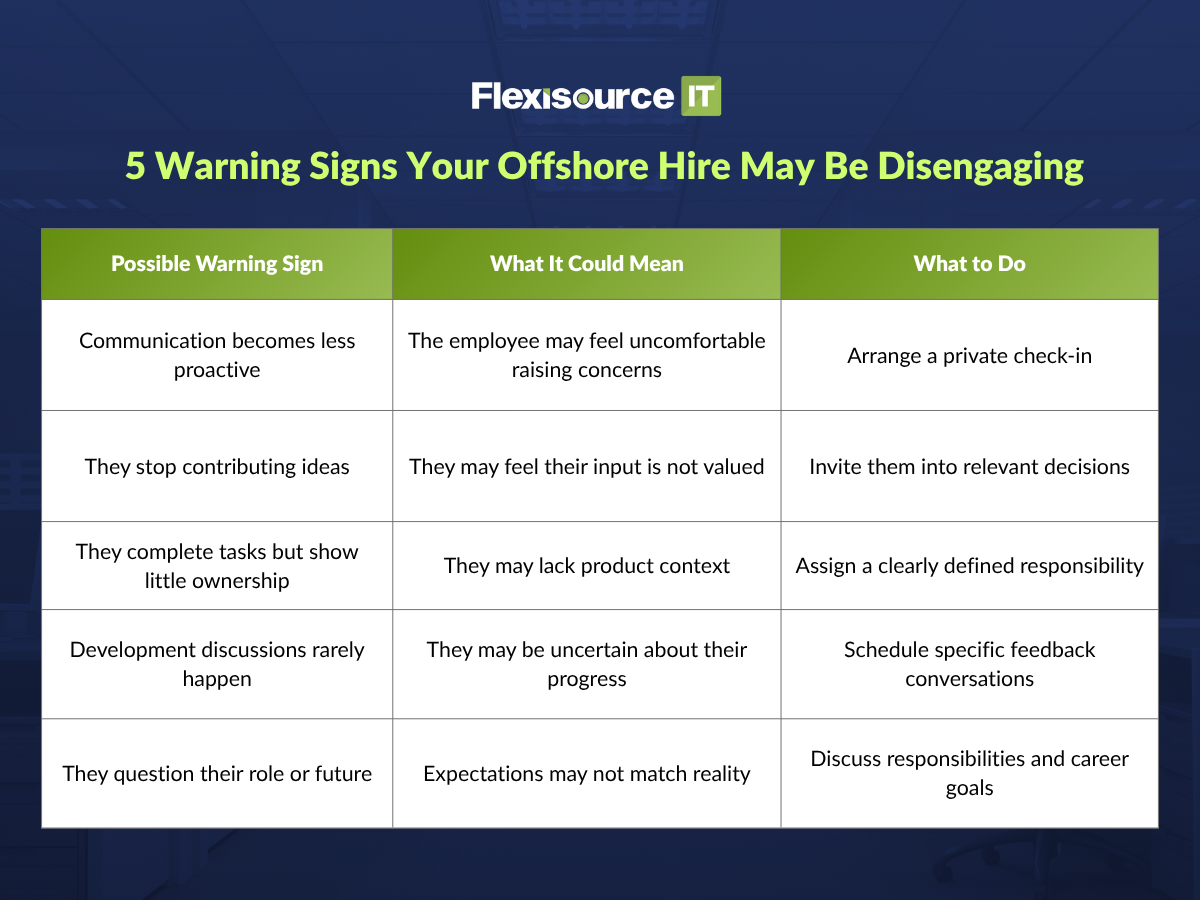
These signs are conversation starters, not performance judgements.
Reduced communication might reflect workload, time-zone differences or personal working preferences. Managers should ask questions before drawing conclusions.
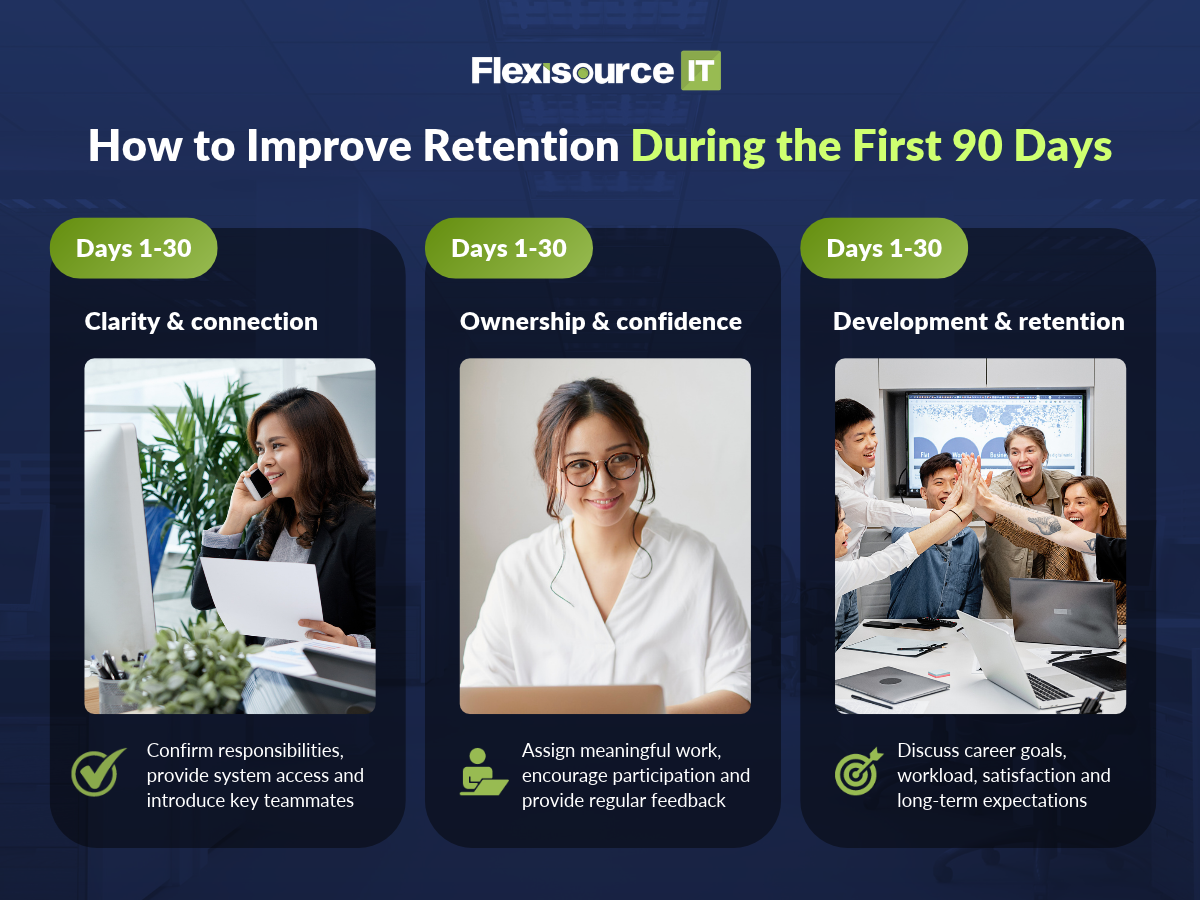
How to Improve Retention During the First 90 Days
The first three months should help employees develop confidence, build relationships and understand how their work contributes to the business. For companies planning to build an offshore development team, a structured onboarding plan can prevent avoidable confusion and help identify concerns early.
| Period | Main Priority | Practical Actions |
| Days 1-30 | Clarity and connection | Confirm responsibilities, provide system access and introduce key teammates |
| Days 31-60 | Ownership and confidence | Assign meaningful work, encourage participation and provide regular feedback |
| Days 61-90 | Development and retention | Discuss career goals, workload, satisfaction and long-term expectations |
First 30 Days: Make Expectations Clear
Onboarding should go beyond administrative requirements.
For offshore developers, this means providing repository access, architecture documentation, coding standards, development tools and clear reporting lines. New hires should also know who to approach when they need help and what successful performance looks like.
Days 31-60: Give Employees Real Ownership
By the second month, employees should have opportunities to contribute independently.
Give them responsibility for a manageable feature, workflow or technical improvement. Include them in relevant planning discussions and provide feedback on both strengths and development areas. The goal is to help employees feel trusted without leaving them unsupported.
Days 61-90: Discuss Growth Before Disengagement Sets In
A 90-day review should cover more than completed tasks.
Ask whether the role matches their expectations, whether they feel supported and what skills they want to develop. These discussions should continue after onboarding. Retention depends on the ongoing employee experience, not just a successful first three months.
When Pay Really Is the Problem
Although this article focuses on overlooked retention issues, compensation should never be dismissed.
Competitive Pay Still Matters
Offshore IT professionals have financial responsibilities, career ambitions and alternative employment opportunities.
If compensation is below market expectations, responsibilities have expanded without appropriate recognition or promised benefits have not materialised, pay may be a genuine reason for leaving. Businesses should review salaries, benefits, workload and market conditions before assuming the problem is purely cultural.
Higher Pay Cannot Fix Every Workplace Problem
A salary increase may not resolve poor management, limited career opportunities or unreasonable workloads.
For example, a developer who feels excluded from important decisions may remain dissatisfied even after receiving a raise. The stronger approach is to assess compensation and employee experience together.
Who Is Responsible for Offshore Employee Retention?
Keeping a dedicated offshore IT team engaged is a shared responsibility between the Australian client and the offshore staffing provider.
Each influences a different part of the employee experience.
What the Australian Client Should Manage
Client managers typically shape day-to-day responsibilities and determine how employees participate in the team.
They should provide:
- Clear priorities and realistic workloads
- Regular technical feedback
- Opportunities to contribute ideas
- Recognition for meaningful work
- Access to relevant planning discussions
Managers should also monitor workload. Persistent pressure, delayed projects and overloaded senior staff may indicate that the offshore team needs additional capacity, rather than expecting existing employees to absorb every new responsibility.
Read: How to Tell If Your Offshore Team Is Understaffed Before It Becomes a Crisis
What the Offshore Staffing Provider Should Support
The staffing provider should support the employment relationship according to the agreed service model. This may include recruitment, HR assistance, employee concerns, training coordination and operational support.
Both parties should communicate when an employee raises concerns. Otherwise, the client may see declining engagement while the provider remains unaware of the underlying problem.
Good retention depends on addressing those concerns before resignation becomes the employee’s preferred solution.
How Flexisource IT Helps Businesses Build Stable Offshore Teams
At Flexisource IT, we help Australian businesses build dedicated offshore teams with a focus on technical suitability, long-term collaboration and employee development.
Recruitment Aligned With Business Requirements
Our recruitment and acquisition process includes candidate screening, interviews, client assessments and skills evaluation where appropriate. This helps businesses assess candidates against their technical requirements and working expectations before making hiring decisions.
Dedicated Professionals Integrated Into Existing Teams
Flexisource IT’s dedicated staffing model is designed to give Australian businesses professionals who work closely with their existing teams. Clear responsibilities, consistent communication and involvement in everyday workflows help establish stronger working relationships.
Training and Employee Development
Employee development is part of Flexisource IT’s approach. Our training and development initiatives include learning opportunities, knowledge sharing and programs supporting technical and professional growth.
For clients, combining these resources with meaningful day-to-day responsibilities can support a more positive employee experience.
Final Thoughts: Retention Starts Long Before Someone Resigns
Early offshore employee turnover is not always about compensation. Sometimes, employees leave because the role never becomes what they expected, meaningful feedback is missing or they struggle to feel included.
For Australian businesses, building a dedicated offshore IT team means creating an environment where skilled professionals have clear responsibilities, opportunities to grow and a genuine connection to the business.
Strong retention starts with recruitment, improves through onboarding and depends on consistent support.
If you’re exploring offshore staffing for SMEs, contact Flexisource IT to discuss building a dedicated team supported by recruitment, collaboration and professional development.