These signs usually appear before a full crisis happens.
The challenge is that understaffing is not always obvious. Your team may still be working hard, joining meetings, completing tasks, and responding to issues. But if demand keeps growing faster than capacity, quality, speed, and morale can start to suffer.
For SMEs, a dedicated offshore IT team can provide stable long-term support before delivery pressure becomes harder to control. At Flexisource IT, we help businesses identify capacity gaps and build offshore teams that support sustainable growth.
Why Offshore Team Understaffing Is Easy to Miss
Understaffing often looks like a performance problem at first. Deadlines slip. Bugs take longer to fix. Communication slows down. Team members seem reactive instead of proactive.
But in many cases, the real issue is not motivation or skill. It is capacity.
A small offshore team can usually handle normal workloads well. The problem begins when that same team is expected to support new features, urgent fixes, support tickets, QA, documentation, infrastructure, and internal requests without additional help.
Busy Teams Can Still Look Productive
A busy offshore team can still appear productive on the surface. They may be closing tickets, attending stand-ups, fixing bugs, and answering messages throughout the day.
However, high activity does not always mean healthy delivery.
If your team is always busy but the roadmap is not moving, that is a warning sign. It may mean they are spending too much time on urgent tasks and not enough time on planned, high-value work. This is especially common in growing SMEs. The business adds more tools, users, systems, and customer expectations, but the offshore team size stays the same.
Small Delays Can Turn Into Bigger Delivery Problems
Understaffing rarely starts with one major failure. It usually begins with small delays.
A task moves to the next sprint. A QA check gets shortened. A bug fix takes longer than expected. A senior developer steps in “just this once.” Then it happens again.
Over time, these small delays can create bigger issues. The backlog grows, releases become riskier, and the team becomes more reactive. By the time leadership notices the pattern, the offshore team may already be under serious pressure.
Read: Offshore Staffing for SMEs: A Practical Guide to Scaling Your Business
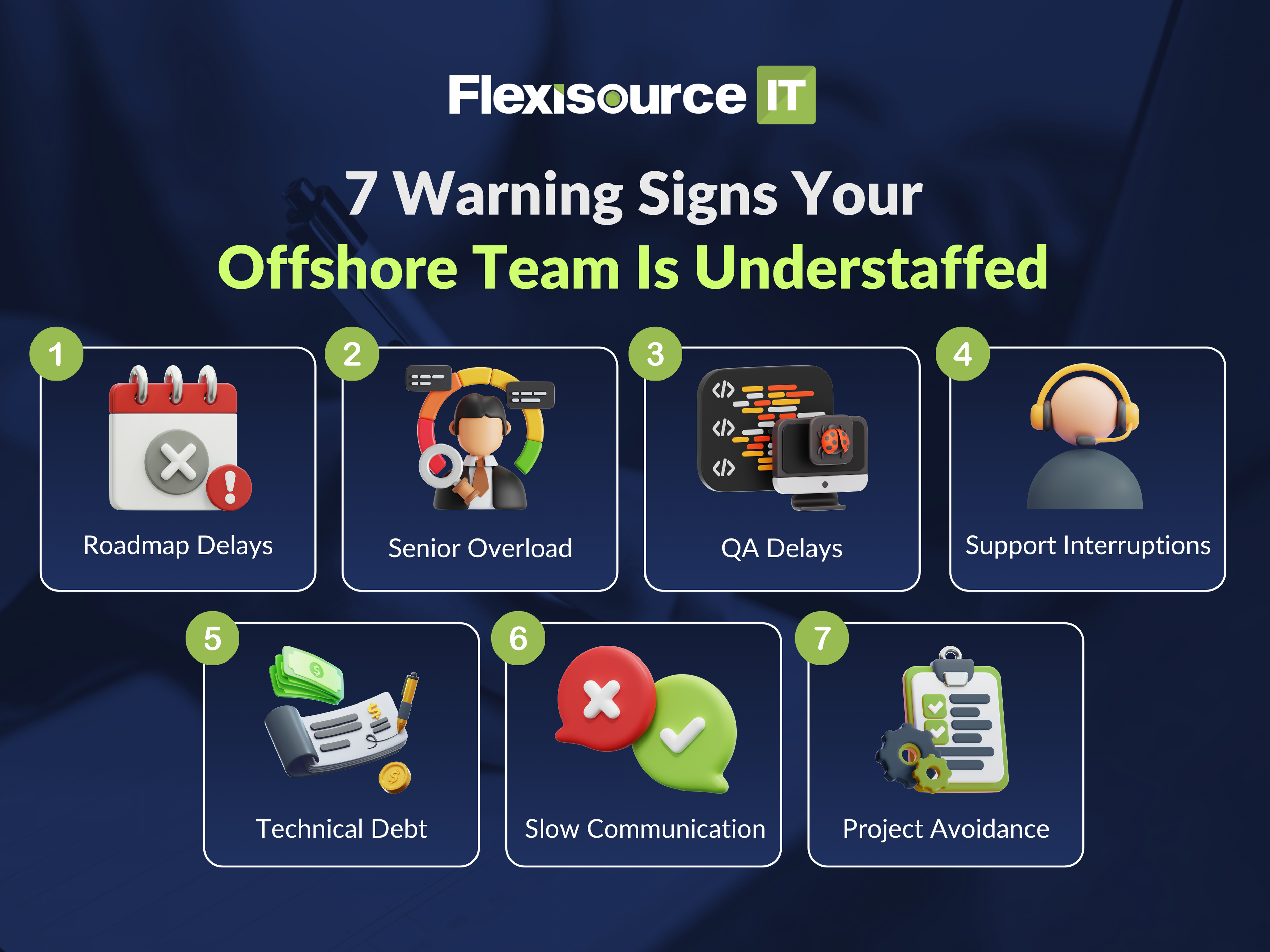
7 Warning Signs Your Offshore Team Is Understaffed
Not every delay means you need more people. But if several of these signs are happening at the same time, it may be time to review your offshore capacity.
1. Your Roadmap Keeps Moving Back
One of the clearest signs of understaffing is a roadmap that keeps slipping.
If planned features, system improvements, or internal projects keep moving from one sprint to the next, your team may not have enough capacity to deliver both current work and future priorities.
This does not always mean the offshore team is underperforming. It may mean the workload has outgrown the team structure.
A stronger approach is to review what work is being delayed and why. If the team understands the requirements but simply cannot get through the work, adding capacity may be necessary.
This is often the point where SMEs start asking whether they should build offshore development team capacity instead of relying on the same small group to absorb every new request.
2. Senior Team Members Are Doing Too Much Low-Level Work
Senior developers, tech leads, and experienced offshore staff should be focused on higher-value work, such as architecture, complex problem-solving, reviews, planning, and mentoring.
If they are constantly pulled into repetitive fixes, basic support requests, routine implementation, or manual tasks, the team may be understaffed at the execution level.
This creates two problems.
First, senior people lose time for strategic work. Second, junior or mid-level capacity gaps remain hidden because senior staff keep covering them.
Over time, this can slow delivery and increase burnout risk. A dedicated offshore IT team should be structured so the right people handle the right level of work.
3. QA Is Rushed or Delayed
QA bottlenecks are another strong warning sign. If testing happens too late, gets shortened, or depends on whoever has time, your delivery process is under pressure.
Rushed QA can lead to:
- More bugs reaching users
- More rework after release
- Slower production fixes
- Lower confidence in deployments
- Extra pressure on developers
This is not just a testing issue. It is a capacity issue across the delivery chain.
If developers are ready to release but QA cannot keep up, adding a QA tester or automation tester may be the first practical step.
4. Support Work Is Interrupting Project Delivery
Support requests can quietly consume offshore team capacity.
A few urgent tickets may seem manageable. But if developers are regularly pulled into access issues, bug reports, user questions, system errors, or internal support tasks, project delivery will slow down.
This is where offshore staffing for SMEs can be useful. Instead of asking developers to handle every support interruption, SMEs can add dedicated support roles that protect development time and keep planned work moving.
5. Technical Debt Keeps Growing
Technical debt is easy to ignore when everyone is focused on urgent delivery. But if refactoring, documentation, automation, infrastructure improvements, and cleanup tasks are always pushed aside, your team may not have enough capacity to maintain the system properly.
This can create bigger problems later. Small issues become harder to fix, releases become riskier, and new team members take longer to understand the codebase.
If your offshore team never has time to improve the foundation, they may be overloaded with short-term delivery work.
6. Communication Is Becoming Slower
Slower communication can also be a sign of understaffing. If updates are delayed, handovers are unclear, documentation is missing, or team members stop raising ideas proactively, they may be too stretched to communicate properly.
This does not always mean the team is disengaged. It may mean they are constantly switching between tasks and trying to keep up with urgent work.
For offshore teams, communication quality matters. When it starts to slip, delivery usually follows.
7. Your Team Is Avoiding New Projects
A clear sign of capacity pressure is when the business starts avoiding new projects because the team cannot take on more work.
This might sound like:
- “We cannot start that yet.”
- “We need to wait until next quarter.”
- “The team is already full.”
- “That will delay everything else.”
When good business opportunities are delayed because capacity is too tight, it may be time to review whether your dedicated offshore IT team needs to grow.
Is It Really Understaffing or a Process Problem?
Before adding more people, it is important to check whether the issue is truly staffing or process.
It may be a staffing problem if priorities are clear, work is well managed, and the team still cannot keep up. In this case, demand is consistently greater than capacity.
It may be a process problem if work is unclear, requirements keep changing, ownership is vague, or documentation is weak. Adding more people to a messy process can create more confusion.
For many SMEs, the answer is both. The business needs more offshore capacity, but also clearer workflows, reporting, onboarding, and ownership.
Which Offshore Role Should You Add First?
The first role you add should match the clearest bottleneck.
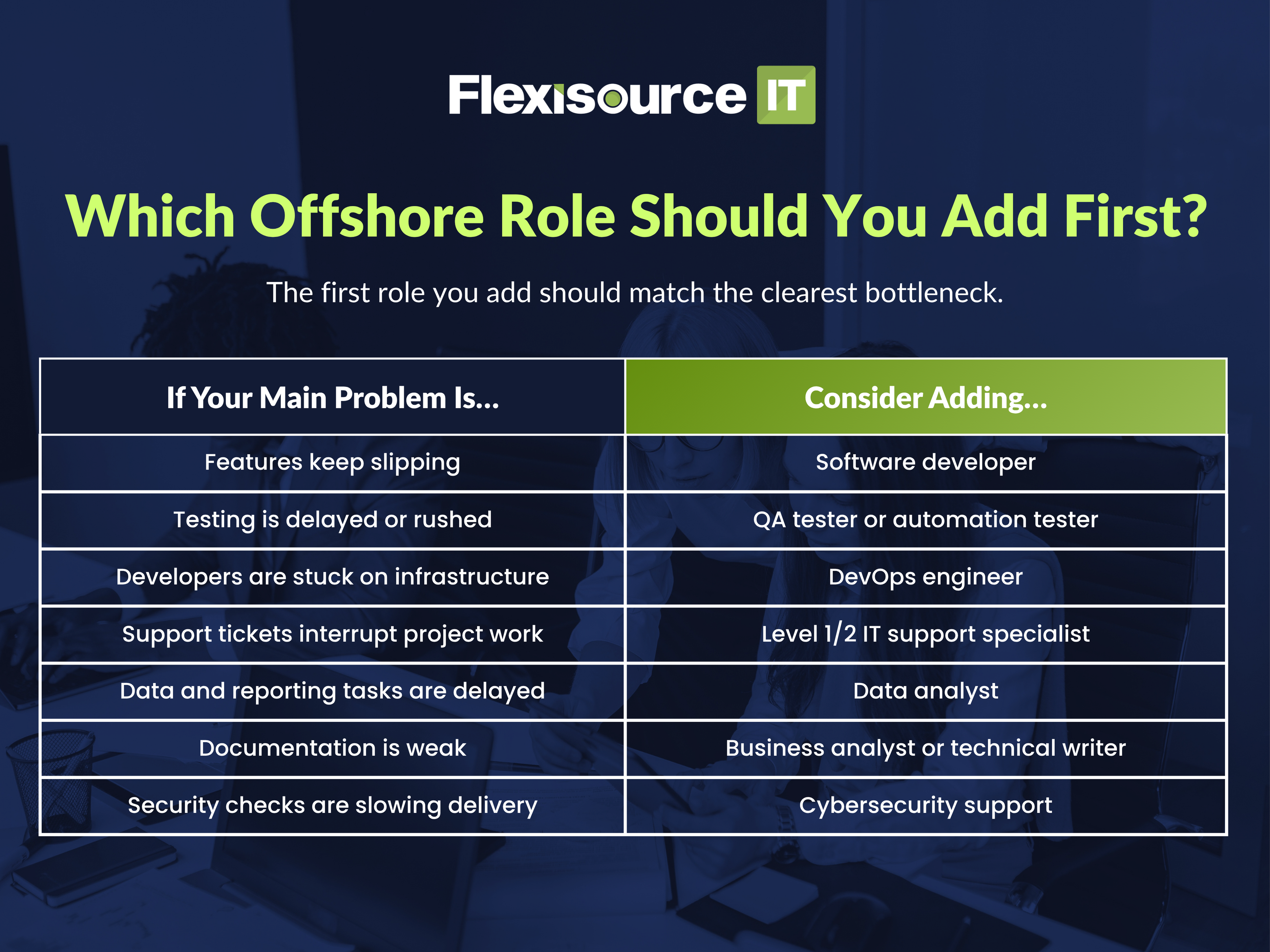
This helps you scale intentionally instead of hiring based on urgency alone.
How to Build Offshore Development Team Capacity Without Overhiring
You do not need to add a large team immediately. The best approach is to start with the smallest useful team.
For some SMEs, that may mean one QA tester. For others, it may mean a developer and support specialist. The goal is to remove the biggest delivery bottleneck first.
Before you build offshore development team capacity, define:
Then measure whether capacity improves. Track backlog movement, QA turnaround, support interruptions, cycle time, release confidence, and team workload.
Why a Dedicated Offshore IT Team Works Well for SMEs
A dedicated offshore IT team gives SMEs stable capacity without relying only on local hiring or short-term contractors.
Unlike temporary support, dedicated offshore team members learn your business, systems, workflows, and standards over time. This creates better continuity and reduces the need to keep re-explaining context.
It also gives SMEs flexibility. You can start small, prove the model, then expand as workload grows.
How Flexisource IT Helps SMEs Scale Offshore Teams
Flexisource IT helps SMEs identify capacity gaps and build offshore teams around real business needs. We help you choose the right roles, integrate offshore talent with your existing team, and create a staffing model that supports long-term growth.
Whether you need development, QA, support, DevOps, or data capability, we can help you scale before delivery starts to suffer.
Final Thoughts: Scale Before Delivery Starts to Break
Understaffing rarely appears as one major crisis. It often starts with slipping timelines, rushed QA, growing technical debt, slower communication, and overloaded senior staff.
If your offshore team is stretched, your roadmap is slipping, or local hiring cannot keep up, Flexisource IT can help you build a dedicated offshore IT team that supports sustainable growth. Contact us today to discuss the right offshore staffing model for your business.
Read next: