Frontend vs. backend development refers to the two main parts of how websites and applications are built. Frontend is what users see and interact with, while backend handles the logic, data, and systems behind the scenes. Both are essential because a website cannot function properly without either one working together.
What Is Frontend vs. Backend Development?
Frontend vs. backend development simply means the difference between what users see and what happens behind the scenes. Frontend focuses on the visual side of a website, while backend manages data, servers, and system logic that make everything work.
What Is Frontend Development?
Frontend development focuses on the parts of a website that users interact with directly. This includes layouts, buttons, menus, and overall design. Frontend developers make sure everything looks good and works smoothly across devices, which improves user experience and keeps people engaged.
What Is Backend Development?
Backend development handles everything users do not see. It manages servers, databases, and application logic that process data and make features work. Backend developers ensure that information is stored correctly, systems run reliably, and actions like logins or payments function properly.
The Simple Difference of Frontend vs. Backend
In simple terms, frontend is what users see, and backend is what makes everything work.
Frontend focuses on experience, while backend focuses on functionality. Both are required for a complete and working application.
How Frontend and Backend Work Together in Real Projects
Frontend vs. backend development is not separate in real-world projects. Both sides constantly interact to deliver a smooth user experience. When one part sends a request, the other responds with the needed data, which keeps everything running properly and ensures users get the results they expect.
How User Actions Trigger Backend Processes
When a user clicks a button or submits a form, the frontend sends a request to the backend.
The backend then processes the request, retrieves data if needed, and sends a response back to the frontend.
How Data Flows Between Frontend and Backend
Data moves back and forth between frontend and backend through APIs.
The frontend requests information, and the backend sends it back in a structured way so it can be displayed properly.
Why Both Are Needed for a Complete Application
Without frontend, users cannot interact with the system. Without backend, nothing works behind the scenes.
Frontend vs. backend development must work together to create a fully functional application.
Frontend vs. Backend: Core Differences Explained
Understanding frontend vs. backend helps you see how each side contributes to a working system. While both are part of the same application, their roles, tools, and responsibilities are very different. Knowing these differences makes it easier to choose the right approach for development projects.
User Interface vs. Server Logic
Frontend focuses on everything users see and interact with, such as layouts, buttons, forms, and overall design. It controls how information is presented and how users move through the application.
Backend focuses on how the system actually works behind the scenes, including processing requests, handling data, and making sure everything runs correctly. Both sides need to stay aligned so that what users see always matches what the system is doing.
Client-Side vs. Server-Side Processing
Frontend runs on the client side, which means it works inside the user’s browser and handles actions like clicking buttons, displaying content, and updating the interface in real time.
Backend runs on the server side, where it processes requests, manages data, and sends results back to the frontend. This separation allows applications to stay fast, responsive, and capable of handling complex tasks without slowing down the user experience.
Tools, Languages, and Technologies Used
Frontend vs. backend development uses different tools because each side solves different problems. Frontend tools focus on building interfaces and improving user interaction, while backend tools focus on managing systems, data, and logic.
Frontend commonly uses HTML, CSS, JavaScript, and modern frameworks, while backend relies on programming languages, databases, and APIs to handle data and system operations efficiently.
Performance and Responsibilities
Frontend performance focuses on how fast and smooth the application feels to users, including loading speed, responsiveness, and visual stability across devices.
Backend performance focuses on how well the system handles requests, manages data, and stays reliable under heavy usage. A strong frontend vs. backend balance ensures that users get both a smooth experience and a stable system at the same time.
Frontend Development Explained (What You Actually Work On)
Frontend vs. backend becomes clearer when you look at what frontend developers actually do. Their role focuses on building the visual and interactive side of applications, ensuring users can easily use and understand the system without confusion.
Designing User Interfaces and Layouts
Frontend developers design how websites look and feel, but more importantly, how users move through each page without getting confused. They decide where elements should go, how information is shown, and how easy it is for users to take action.
They organise content in a way that feels natural, create layouts that guide user attention, and make sure everything stays consistent across pages. Good design here is not just about looks, it’s about helping users find what they need quickly and easily.
Improving User Experience and Responsiveness
Frontend developers make sure websites work well on different devices and screen sizes, whether someone is using a phone, tablet, or desktop. Every element must adjust properly so users get the same smooth experience no matter how they access the site.
They also focus on speed, usability, and interaction, making sure pages load quickly and respond instantly to user actions. Small improvements here, like faster
Common Frontend Technologies
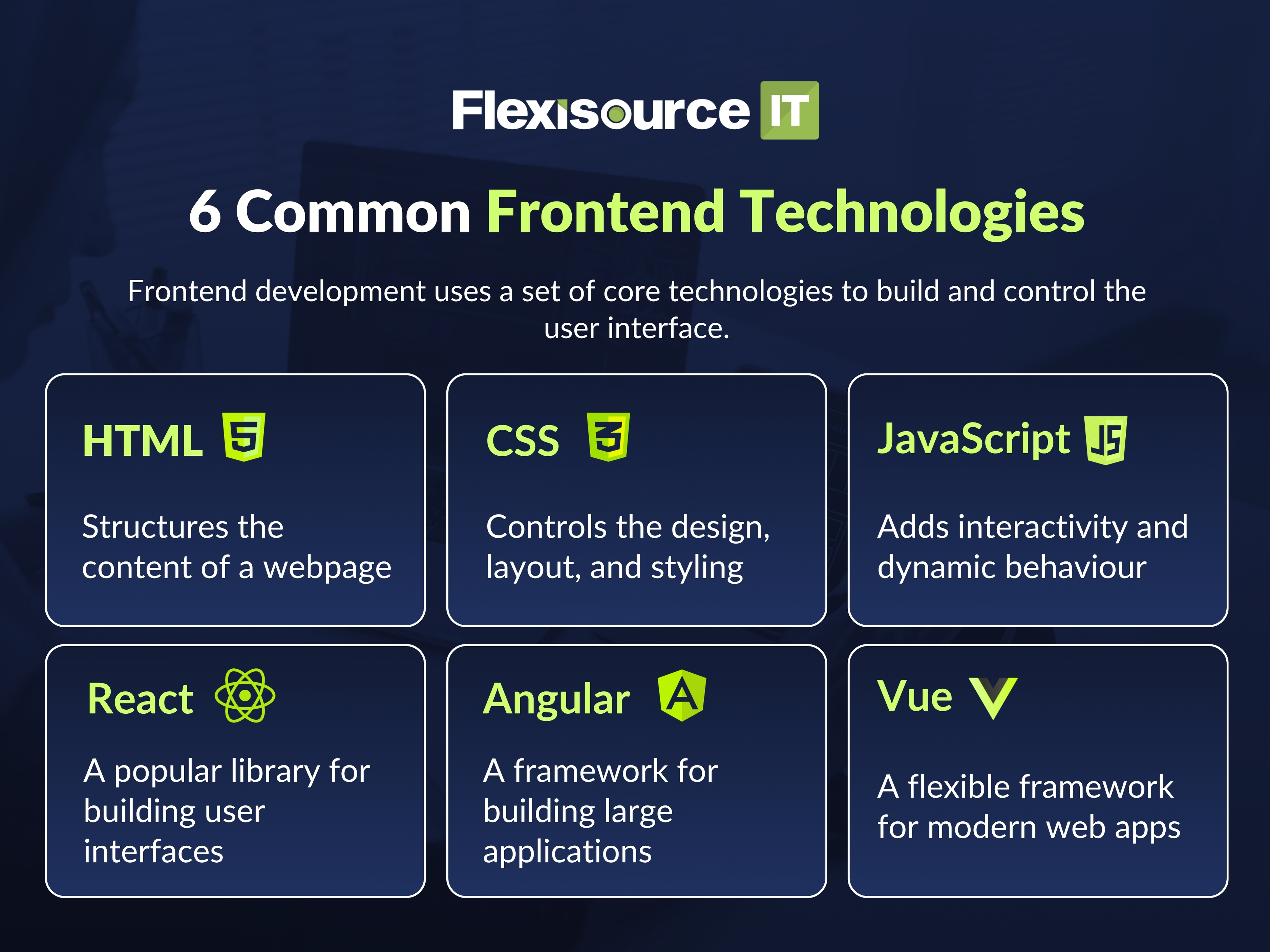
Frontend development relies on a set of core technologies that build and control the user interface. These tools help developers create responsive and interactive designs that users can easily navigate.
Here are the most commonly used frontend technologies:
- HTML – structures the content of a webpage
- CSS – controls the design, layout, and styling
- JavaScript – adds interactivity and dynamic behaviour
- React – a popular library for building user interfaces
- Angular – a framework for building large applications
- Vue – a flexible framework for modern web apps
Backend Development Explained (What Happens Behind the Scenes)
Frontend vs. backend becomes even clearer when looking at backend responsibilities. Backend development focuses on systems that power the application, handling data, logic, and operations that users rely on without ever seeing them directly.
Managing Servers and Databases
Backend developers manage servers where applications run and databases where data is stored.
They ensure everything is secure, organised, and accessible when needed.
Handling Business Logic and Data Processing
Backend developers define how the system behaves.
They process requests, apply rules, and return the correct results to users.
Common Backend Technologies
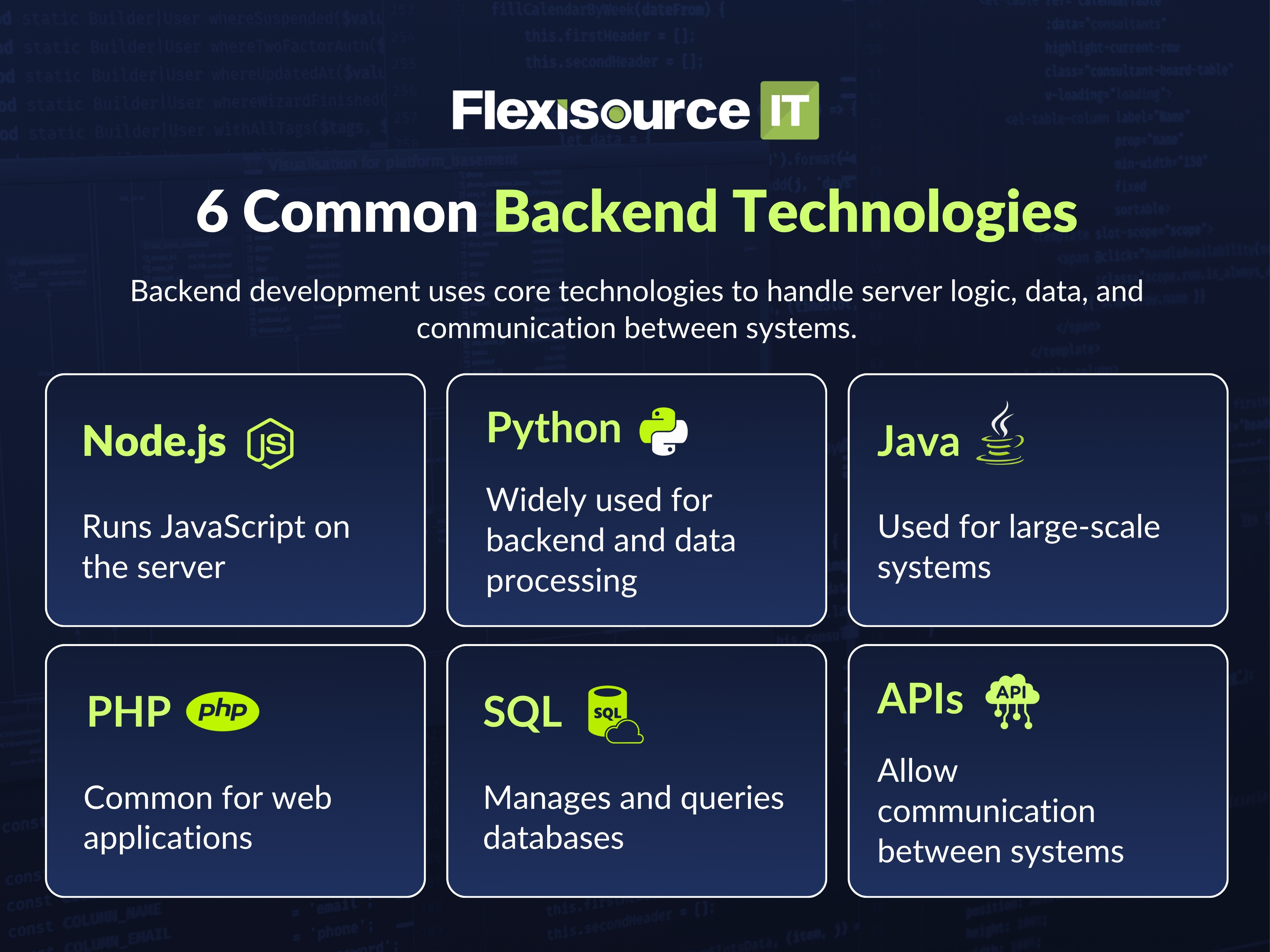
Backend development uses tools that handle logic, data, and system operations. These technologies allow applications to process information and respond to user requests efficiently.
Here are the most commonly used backend technologies:
- Node.js – runs JavaScript on the server
- Python – widely used for backend and data processing
- Java – used for large-scale systems
- PHP – common for web applications
- SQL – manages and queries databases
- APIs – allow communication between systems
Frontend vs. Backend: Skills Developers Need
Frontend vs. backend development requires different skill sets, but both are equally important. While technical skills vary depending on the role, strong fundamentals and problem-solving ability are essential for both frontend and backend developers to build effective applications.
Skills Required for Frontend Developers
Frontend developers need to focus on design, usability, and interaction. They must understand how users think and how interfaces should behave.
Some of the frontend skills include:
- HTML, CSS, and JavaScript
- UI/UX design principles
- Responsive design
- Browser compatibility
- Basic performance optimisation
Skills Required for Backend Developers
Backend developers need strong logic and system thinking skills. They focus on how data moves and how systems respond to requests.
A few backend skills include:
- Programming languages like Python, Java, or Node.js
- Database management
- API development
- Security practices
- System architecture
Soft Skills That Matter for Both Roles
Technical skills alone are not enough. Developers also need soft skills to work effectively within teams and deliver projects successfully.
Important soft skills include:
- Problem-solving
- Communication
- Collaboration
- Time management
- Adaptability
Frontend vs. Backend Developer Roles in a Team
Frontend vs. backend roles become clearer when you look at how teams actually work. Each developer focuses on specific tasks, but both sides must stay aligned to ensure the application functions properly and delivers a consistent user experience.
What Frontend Developers Focus On Daily
Frontend developers spend most of their time working on what users actually see and interact with, such as layouts, buttons, navigation, and overall design updates. They constantly test how pages look on different devices to make sure everything stays consistent and easy to use.
They also fix visual bugs, improve loading speed, and adjust designs based on feedback. The goal is not just to make things look good, but to make sure users can move through the site smoothly without confusion or frustration.
What Backend Developers Focus On Daily
Backend developers focus on making sure everything behind the scenes works properly, including servers, databases, and application logic. They handle how data is stored, retrieved, and processed whenever users perform actions like logging in or submitting forms.
A big part of their work involves fixing system issues, improving performance, and making sure everything stays secure. They also build and maintain APIs that allow the frontend to communicate with the backend without problems.
How They Collaborate on Projects
Frontend and backend developers work closely together throughout the entire project, not just at the start or end. They rely on shared requirements and APIs to connect what users see with how the system actually works.
Clear communication is key here, especially when features are being built or updated. When both sides stay aligned, the result is a smoother workflow, fewer errors, and a final product that works exactly as expected.
Which One Should You Choose Between Frontend and Backend?
Choosing between frontend vs. backend depends on your interests, goals, and strengths. Both paths offer strong career opportunities, but they focus on different areas of development. Looking at the pros and cons of each can make the decision much easier.
Based on Your Interests (Design vs. Logic)
If you enjoy visuals, layouts, and user interaction, frontend may feel more natural. If you prefer problem-solving, systems, and how things work behind the scenes, backend may be a better fit.
Frontend Pros:
- More creative and design-focused
- Immediate visual results from your work
- Strong focus on user experience
Frontend Cons:
- Can be repetitive with design adjustments
- Requires constant updates due to changing trends
- Browser compatibility issues can be frustrating
Backend Pros:
- More focused on logic and problem-solving
- Works on core system functionality
- Less affected by design changes
Backend Cons:
- Less visual feedback, which can feel abstract
- Debugging can be more complex
- Requires deeper understanding of systems and architecture
Based on Career Goals
Frontend roles are often more visible because they deal with what users see, while backend roles are critical for building stable and scalable systems.
Frontend Pros:
- Easier entry point for beginners
- High demand for UI-focused roles
- Opportunities in design-heavy industries
Frontend Cons:
- Competitive market in some regions
- May require learning design tools in addition to coding
Backend Pros:
- Strong demand for experienced backend developers
- Higher involvement in system design and architecture
- Often leads to senior technical roles
Backend Cons:
- Steeper learning curve at the start
- Requires knowledge of databases, security, and infrastructure
Based on Market Demand and Opportunities
Both frontend vs. backend roles are in demand, but the type of demand can vary depending on industry and project needs.
Frontend Pros:
- Needed in almost every web project
- Strong demand for modern frameworks like React and Vue
- Opportunities in startups and product teams
Frontend Cons:
- Trends change quickly, requiring constant learning
- Skills can become outdated faster
Backend Pros:
- Consistent demand across industries
- Critical for building scalable systems
- More opportunities in enterprise and large-scale projects
Backend Cons:
- Less visibility in end-user experience
- Often requires ongoing system maintenance
Quick TakeawayIf you enjoy design and seeing results instantly, frontend is a great choice. |
Many developers eventually learn both, especially as full-stack roles become more common.
Can One Developer Do Both? (Full-Stack Development)
Frontend vs. backend skills can be combined into one role, which is known as full-stack development. This approach allows developers to work on both sides of an application, making them more flexible and valuable in many projects.
What Is a Full-Stack Developer?
A full-stack developer is someone who can work on both frontend and backend development, handling both user interface and system logic in a single role.
How Businesses Benefit From Strong Frontend and Backend Teams
Businesses benefit the most when frontend vs. backend teams work together effectively. A balanced approach ensures both user experience and system performance are handled properly, leading to better results and more reliable applications.
Faster Development and Better User Experience
When frontend and backend teams work closely together, development moves faster because both sides can build, test, and adjust features at the same time without waiting on each other. This reduces delays and helps teams release updates more consistently.
Users experience smoother navigation, faster loading times, and fewer issues when everything is aligned properly. A strong frontend vs. backend setup makes the product feel stable, easy to use, and reliable from the user’s perspective.
Scalable and Reliable Systems
A well-built backend allows applications to handle more users, more data, and more complex features as the business grows without breaking or slowing down. Stability at this level is critical for long-term success.
At the same time, frontend development ensures that users can still interact with the system easily as it expands. A balanced frontend vs. backend approach keeps performance steady while making sure the experience stays simple and responsive.
Building Balanced Development Teams
Having the right mix of frontend and backend developers helps prevent bottlenecks, especially when one side is waiting on the other to complete tasks. Balanced teams can move faster and handle changes more efficiently.
Flexisource IT helps businesses build frontend vs. backend teams that are aligned with real project needs, making it easier to deliver high-quality applications without slowing down or overloading internal resources.
Frequently Asked Questions About Frontend vs. Backend
- What is the difference between frontend vs. backend?
Frontend is what users see, while backend handles logic and data behind the scenes.
- Is frontend easier than backend?
Frontend may feel easier at first, but both have their own challenges.
- Which pays more: frontend or backend?
Salaries vary, but both roles are highly valued in the market.
- Can I learn both frontend and backend?
Yes, this is called full-stack development.
- Do businesses need both frontend and backend developers?
Yes, both are required to build complete applications.
Final Thoughts: Understanding Frontend vs. Backend Development
Frontend vs. backend development is not about choosing one over the other. Both play essential roles in building modern applications, and success comes from how well they work together.
If your business is looking to build or improve web applications, Flexisource IT can help you create the right frontend and backend team. Contact us today to get started.
Read next:
- Offshore Developers vs In-House Developers: Pros and Cons
- Cloud Support Services: Why Businesses Are Outsourcing Cloud Management
- What Is Shift-Left Testing in Software Development? Complete Guide for Agile & DevOps Teams
- AI Development Company in Australia: AI and Software Development for Growth
- What Is Vibe Coding and Why Is It Trending in Modern Software Development?