Australian businesses operate in a market that changes fast. The customer needs a shift. Technology moves quickly. Budgets are tight, and mistakes are expensive. In this environment, long and rigid project plans often fail before a product even reaches the market, which is why many teams turn to the agile methodology development life cycle instead.
Rather than locking everything in at the start, this approach allows teams to learn, adjust, and improve as they go. It focuses on small releases, real feedback, and steady progress, helping organisations stay responsive in uncertain conditions.
The agile methodology development life cycle is an iterative and customer-focused way of building software. Work is delivered in short cycles. Customers see results early. Risks are reduced before they grow too large.
However, agile is about a structured workflow that guides decisions from idea to launch and beyond. When done well, it creates clarity, accountability, and predictable delivery across the entire software development lifecycle (SDLC).
Flexisource IT supports this process end-to-end. We specialise in Scrum and Kanban, the two most widely used frameworks for running the agile methodology development life cycle in real business environments.
6 Stages of the Agile Methodology Development Life Cycle
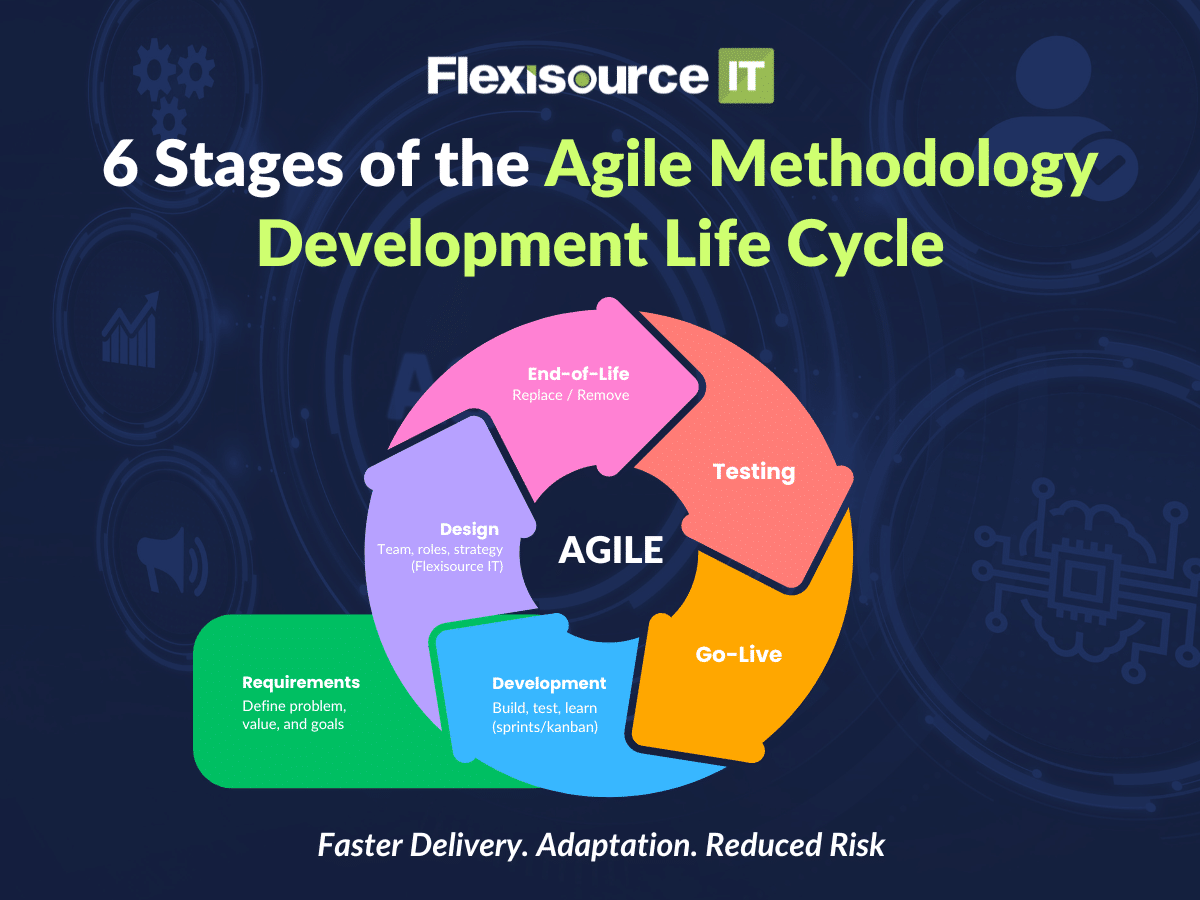
The agile methodology development life cycle is made up of six clear stages. Each stage builds on the last, but none are fixed forever. Teams can move back and forth as needed. This flexibility is one of the key benefits of agile methodology.
These stages also align closely with modern agile software development phases, which focus on learning, delivery, and improvement.
Stage 1: Concept
The Concept stage is where everything begins. This is where the business defines the problem it wants to solve.
Key questions include:
- What value will this product deliver?
- Who is it for?
- Why does it matter now?
At this stage, no code is written. The focus is on business goals, market fit, and high-level scope. Getting this wrong can waste months of work later.
This early clarity sets the direction for the entire agile methodology development life cycle and reduces risk across the broader SDLC.
Stage 2: Inception (Critical Phase)
The Inception stage is the most critical phase of the agile process. This is where strong decisions create long-term success.
In this stage, the team is formed, roles are defined, and the delivery approach is agreed. This is also where Flexisource IT adds significant value before a single line of code is written.
Flexisource IT’s Consultation process helps businesses:
- Clarify technical and business requirements
- Choose between Scrum or Kanban
- Define success metrics and timelines
At the same time, our recruitment process ensures the right people are selected from day one. This is how dedicated agile teams are built with purpose, not guesswork.
A strong Inception phase ensures the later agile software development phases run smoothly and stay aligned with business goals.
Stage 3: Iteration/Construction
This is where the real work happens. The Iteration stage is the engine of the agile methodology development life cycle, and it is where ideas turn into working software. Most of the time, this stage runs for the longest period and requires the highest level of discipline.
Work is broken into short cycles called sprints in the scrum life cycle, or managed as a continuous flow when using Kanban. These short cycles reduce risk because progress is reviewed often, not just at the end of the project. Problems are identified early, when they are easier and cheaper to fix.
Each cycle includes planning, coding, testing, and review. Nothing is done in isolation. Developers, testers, and business stakeholders stay connected throughout the process. This structure is central to modern agile software development phases, where learning happens continuously.
Typical activities include:
- Sprint planning: This is where the team agrees on what work will be done next. Tasks are prioritised based on business value. Clear planning ensures everyone understands their responsibilities before work begins.
- Daily stand-ups: These short meetings keep the team aligned. Each person shares what they worked on, what they will work on next, and any blockers they are facing. This rhythm is essential for keeping the agile methodology development life cycle moving forward smoothly.
- Active development and testing: Code is written, reviewed, and tested at the same time. Testing is not delayed until the end. This approach improves quality and supports the long-term health of the SDLC.
This stage reflects the heart of effective agile software development phases, where progress is visible, measurable, and easy to explain to stakeholders. There are no long periods of silence or uncertainty.
Flexisource IT’s Agile Project Managers play a critical role during this stage. We always ensure the process stays structured and focused, even as requirements evolve. Our job is not to protect the team’s ability to deliver.
We:
- Remove blockers so developers can stay focused on meaningful work
- Track progress using clear metrics and regular reviews
- Keep teams focused on outcomes, not just tasks, ensuring business value is delivered every sprint
This level of oversight ensures dedicated agile teams remain productive, accountable, and aligned with business goals. Quality is maintained, timelines are respected, and the entire software development lifecycle (SDLC) stays under control.
Related: What is Agile Software Development? Definition, Principles, Pros & Cons
Stage 4: Release
The Release stage is where working software is delivered to users. This may be a Minimum Viable Product (MVP), a new feature, or a system update.
Quality assurance is critical at this point. Testing ensures the product works as expected and meets business needs.
Because agile delivers in small increments, releases happen more often. This is one of the major benefits of agile methodology. Issues are found early, not months later.
This stage closes one loop of the agile methodology development life cycle, but it also feeds directly into the next phase of learning and improvement.
Stage 5: Maintenance
Once software is live, the work is not finished. Maintenance ensures the system stays secure, stable, and useful.
This stage includes:
- Bug fixes
- Performance improvements
- User feedback reviews
Flexisource IT supports this phase through its IT Support Services, ensuring systems continue to deliver value long after release.
Maintenance is often overlooked, but it is a core part of both the agile software development phases and the wider SDLC.
Stage 6: Retirement
Every product or feature has a lifespan. The Retirement stage is about knowing when to stop.
This may involve:
- Removing unused features
- Replacing outdated systems
- Shutting down products that no longer deliver value
By planning for retirement, businesses avoid wasted spend and technical debt. This final stage completes the agile methodology development life cycle in a clean and controlled way.
Why “Agile” Fails (And How to Fix It)
Agile often fails not because the method is wrong, but because it is poorly implemented.
The Problem
Common issues include:
- Unclear roles
- No ownership
- Weak planning
- Inexperienced leadership
Without structure, agile becomes chaos. Teams lose focus, and delivery slows.
The Solution
Successful agile needs experienced leadership. This includes a Scrum Master or Agile Coach who understands the scrum life cycle and team dynamics.
The Flexisource Difference
Flexisource IT goes beyond providing developers. Each engagement can include a delivery team consisting of a solution architect, business analyst, QA manager, and scrum master.
This structure protects the agile methodology development life cycle and ensures the promised benefits of agile methodology are actually delivered.
Agile vs Waterfall: Why Switch?
Here is a simple comparison to show why many businesses move away from Waterfall:
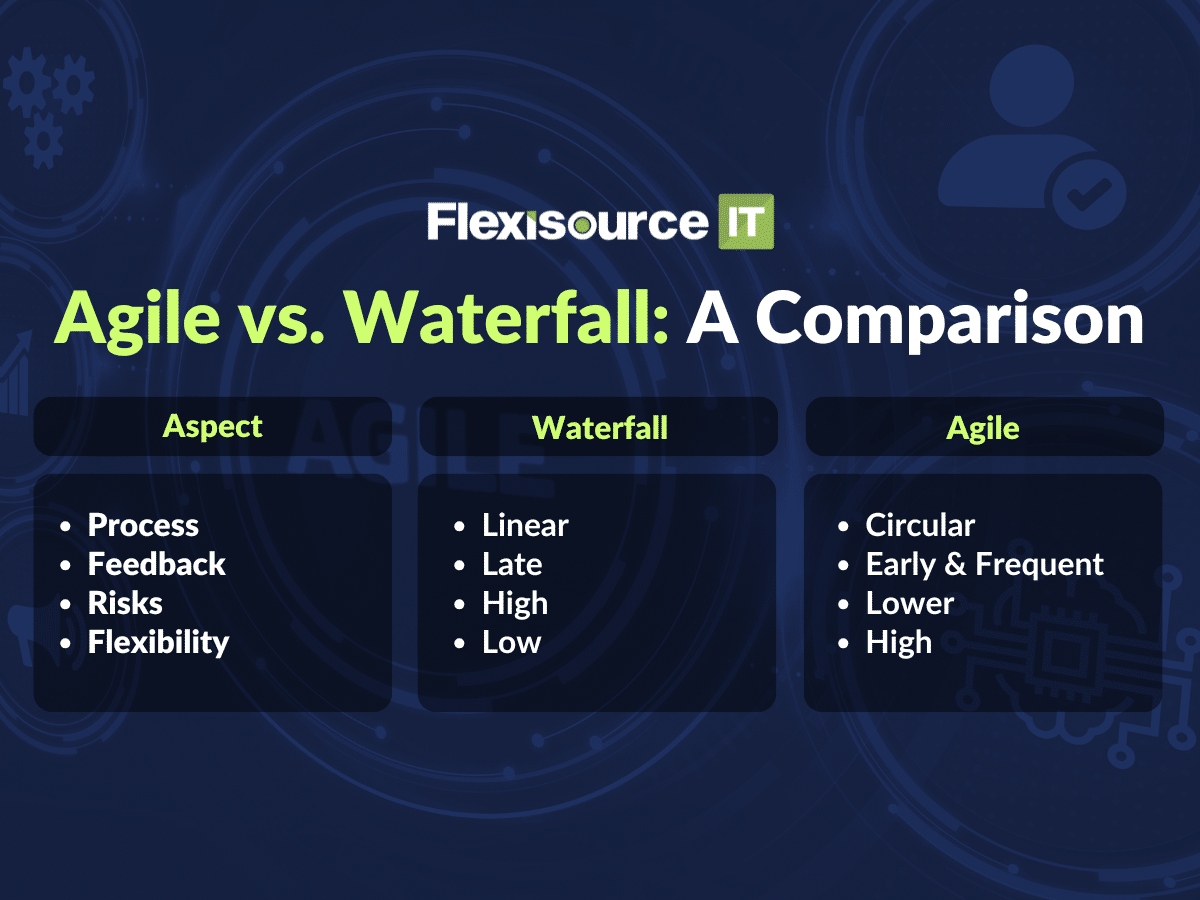
Agile supports faster learning and better outcomes across the SDLC. This is why it continues to replace older models.
Implementing the Cycle with an Offshore Team
Many Australian businesses hesitate to use offshore teams. The concern is understandable. Leaders worry about poor communication, missed deadlines, and teams that feel disconnected from the business.
In reality, offshore delivery only fails when it is poorly structured. When the agile methodology development life cycle is implemented correctly, offshore teams can perform just as well as local ones, sometimes better.
The key issue is not location. It is how the team is built and managed.
Flexisource IT solves this problem by designing offshore teams specifically to support modern agile software development phases. Every team is structured to fit seamlessly into the client’s existing SDLC.
Closing the Communication Gap
One of the biggest myths about offshore delivery is that communication will always suffer. Flexisource IT addresses this directly through intentional team design.
Teams are built with:
- Timezone alignment to ensure real-time collaboration with Australian stakeholders
- Fluent English speakers who can confidently participate in planning, reviews, and problem-solving
- Structured daily stand-ups that follow the scrum life cycle and keep work transparent
This structure ensures that meetings have real working sessions where blockers are raised and decisions are made.
Because communication is consistent and clear, feedback loops remain short. This is essential for maintaining momentum across the agile methodology development life cycle.
Agile Discipline (Not Just Developers)
Another common failure point is hiring offshore developers without agile leadership. This often leads to confusion, rework, and slow delivery.
Flexisource IT avoids this by providing more than just technical resources. Offshore teams are supported by experienced agile leaders who understand both Scrum and Kanban.
This includes:
- Clear sprint planning
- Strong backlog management
- Ongoing prioritisation with the business
By applying agile discipline consistently, offshore teams stay aligned with business goals and deliver steady progress. This reinforces the benefits of agile methodology, such as faster feedback, reduced risk, and predictable delivery.
Dedicated Teams That Feel Local
Flexisource IT builds dedicated agile teams, not shared or rotating resources. Each team is committed to a single client and product.
This creates:
- Strong ownership
- Deeper product knowledge
- Better long-term outcomes
Over time, our teams begin to operate like an extension of the client’s internal staff. We understand the business context, customer needs, and delivery standards.
Offshore delivery becomes a strategic advantage rather than a cost-saving compromise. The agile methodology development life cycle continues to function smoothly, regardless of geography. When delivering customised IT solutions, this approach naturally aligns with broader software development services, ensuring quality and consistency from concept through maintenance.
Conclusion
The agile methodology development life cycle turns uncertainty into structure. It replaces long guesses with short learning cycles. It reduces risk while increasing speed and clarity. This makes planning easier and outcomes more predictable for Australian businesses.
When supported by the right people, tools, and leadership, agile becomes a growth engine, not a buzzword. It helps teams stay focused, adapt quickly, and deliver real value over time.
Don’t just hire coders; build an agile engine. Contact Flexisource IT today to build your dedicated agile team.
Read more:
- Project Management and Agile Methodology: The Secret to Scaling Offshore Teams
- How to Choose the Right Partner for Your Web Application Development Project
- Top Information Technology & Communication Trends Transforming Australian Businesses in 2026
- The 2026 Skills Gap: Why Australian Technology Companies Are Looking Offshore for Top Talent
- Outsourcing Software Development to the Philippines: What Australian Businesses Need to Know